

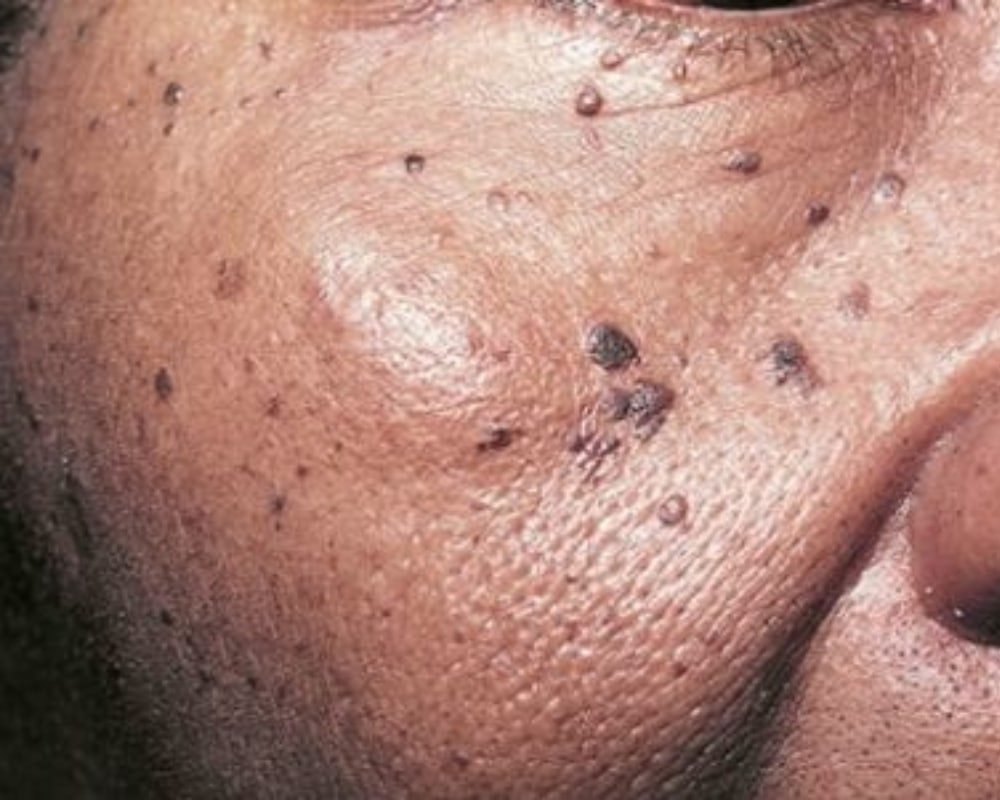
What is Dermatosis Papulosa Nigra & How Does It Present?
Dermatosis Papulosa Nigra (DPN) is a benign skin condition characterised by multiple small, dark-coloured raised spots (papules) that typically appear on the face, neck and upper trunk and is sometimes described as a variant of seborrhoeic keratosis in skin of colour.

Key Identifying Features
- The lesions are smooth, dome-shaped or slightly elevated
- Often brown to black in colour
- Typically 1–5 mm in diameter (though may be a little larger)
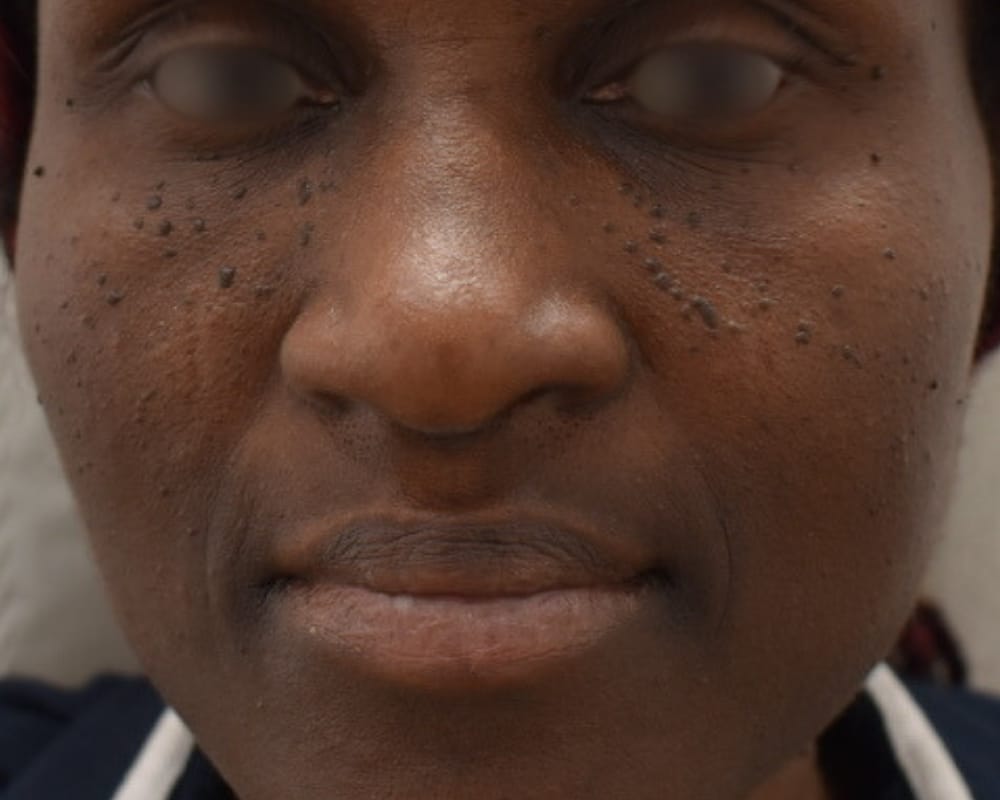
Where They Commonly Occur
They tend to appear in zones of sun-exposure, friction and visibility predominantly:
- Face
- Forehead
- Cheeks
- Neck
- Upper Trunk/Shoulders

Contributing Factors
While the exact cause of DPN is not fully understood, the following factors are recognised as contributing to or increasing the likelihood of their appearance:
- A strong genetic component is recognised: many people with DPN will report a family history of similar lesions, particularly in Fitzpatrick skin types IV–VI.
- Sun exposure may play a contributory role, especially given the predilection for sun-exposed areas.
- Age: as people grow older, the number and size of lesions may increase.

Prevalence
Exact prevalence numbers vary, but estimates suggest DPN is far more common in individuals with darker skin tones (especially Fitzpatrick skin types IV–VI). It can occur from adolescence or early adulthood and increase in number and size with age.


Treatments We Offer
At Cambridge Contour Clinic, we specialise in the careful assessment and removal of benign skin lesions for clients who choose to do so for cosmetic or comfort reasons. Here’s how we approach DPN:
Micro-Plasma Removal
We use a surgical-grade micro-plasma device, which creates a precise plasma arc (~0.02 mm accuracy) to vaporise the lesion tissue.
Cryotherapy
Using a fine jet of N₂O under high pressure, we freeze the lesion with millimetre precision.
Which is most suitable for you is best discussed within a consultation with one of our specialists, where they will discuss your treatment options, check you are able to have said treatments (i.e there are no health contraindications). They will also discuss healing and success rates, check that you are happy with any potential risks and address any necessary pre-care, post-care, treatment plans and pricing.
Other Potential Treatment Options
Here at Cambridge Contour Clinic, we focus on minimally invasive techniques to optimise healing and cosmetic outcomes. However, we believe in transparency to help our clients make an informed choice on how they would like to proceed. Therefore, if we are aware of other recognised treatment methods that may be suitable for you, we will discuss these during your consultation.
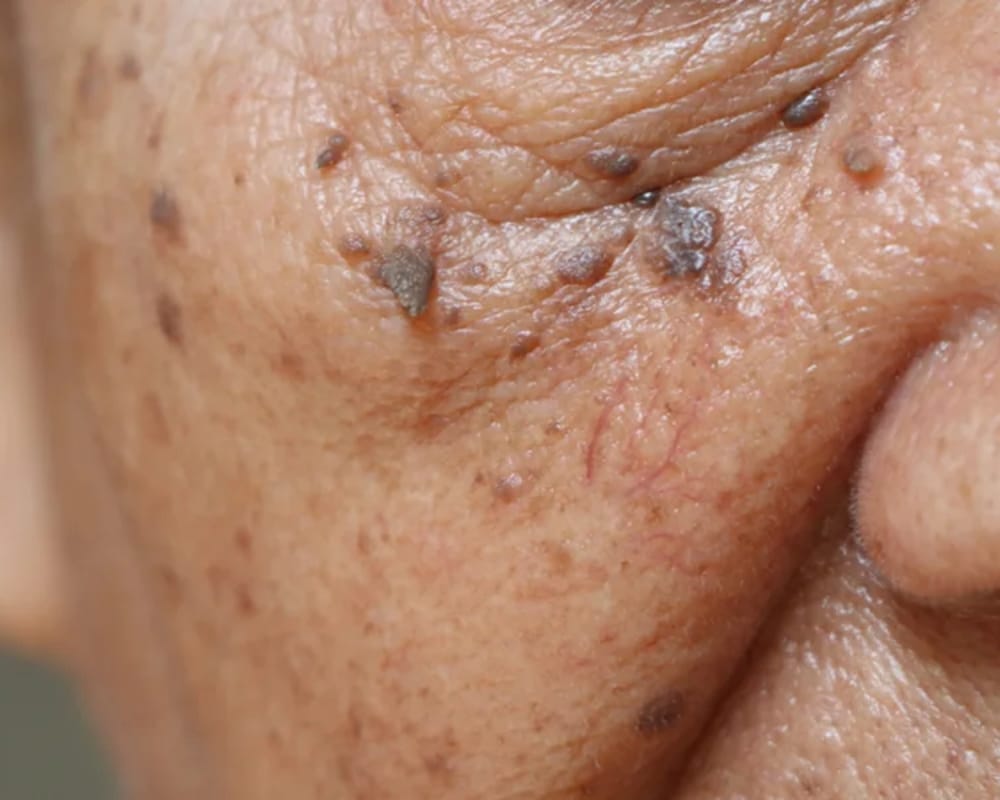
When to See a Specialist
You may wish to consider discussing your lesion or treatment if:
- Your lesion(s) change in shape, colour, size or bleed - this may require further investigation.
- It becomes painful, irritated, or catches on clothing/jewellery repeatedly.
- You are unsure whether a lesion is DPN or something else (keratosis or mole with suspicious features) as assessment is important.
- You would like removal of your lesion(s) for comfort or cosmetic reasons, as professional treatment is recommended over home methods.
Dermatosis Papulosa Nigra (DPN) Frequently Asked Questions
Is DPN harmful or likely to become cancerous?
No - DPNs are benign and do not turn into skin cancer.
Will removing the lesions stop more from appearing?
Unfortunately, no - removing existing lesions does not alter the underlying tendency to develop them, so new ones may appear over time.
Does treatment hurt?
Most treatments are done under local anaesthetic or topical numbing, so discomfort is minimal.
Will the treatment scar?
There is a potential risk of hypopigmentation or hyperpigmentation in certain skin types. We will discuss this with you during your consultation.