

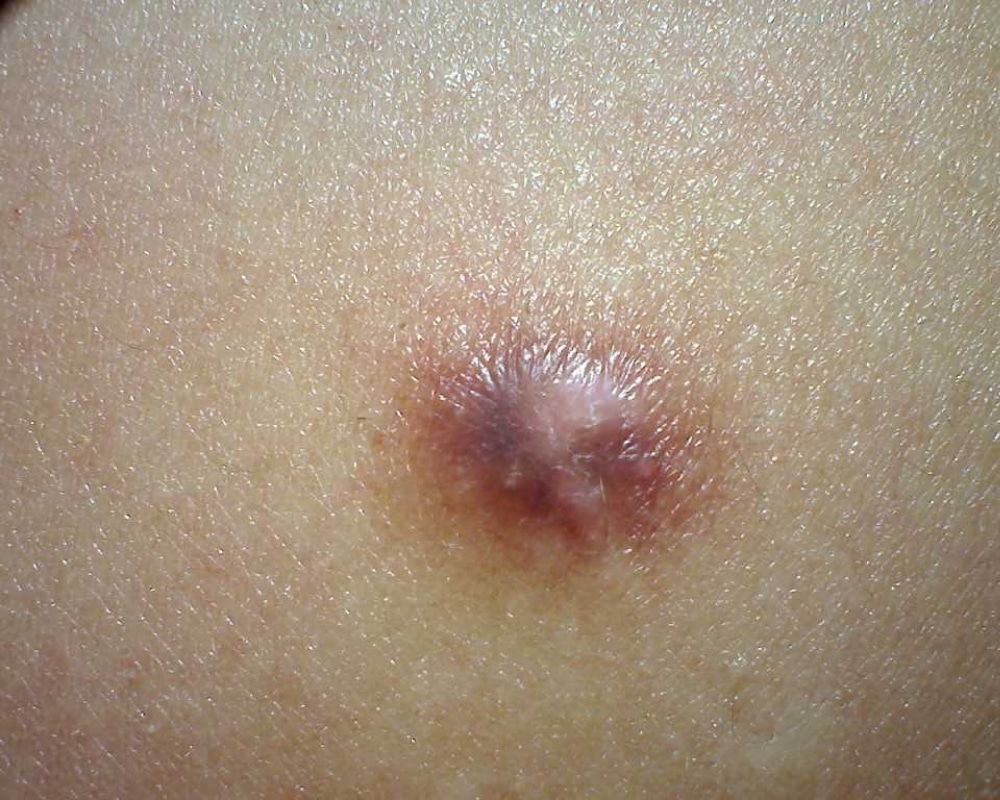
What is a Dermatofibroma?
A common, benign overgrowth of fibrous tissue in the dermis (the deeper layer of the skin) - typically harmless, but understandable if it causes concern or irritation. At Cambridge Contour Clinic, we offer expert assessment and, where appropriate, minimally invasive removal with cosmetic care in mind.

Key Identifying Features
- Firm, rounded bump (usually 7–10 mm across)
- Pink, brown or darker coloured depending on skin tone
- Smooth surface or slightly scaly on top
- Dimpling when gently pinched from the sides
- Often stable over time, though some may darken or lighten gradually
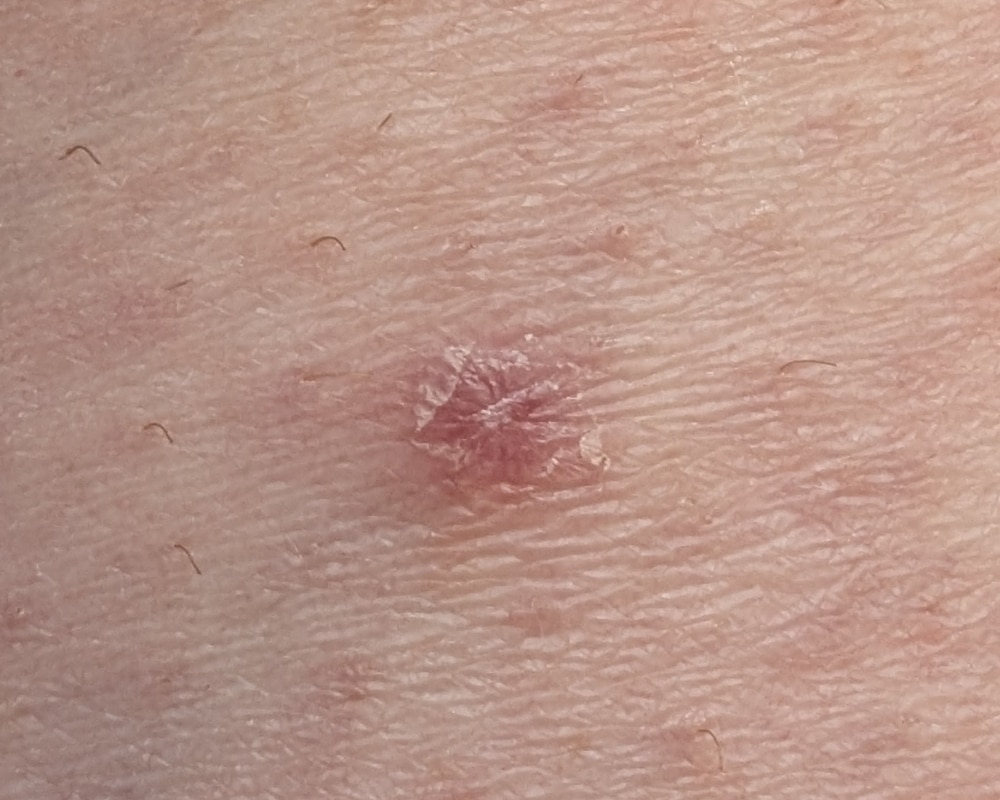
Where They Commonly Occur
Dermatofibromas may form anywhere, but are most commonly found on:
- Lower legs (particularly in females)
- Upper arms
- Shoulders
- Occasionally torso
Usually, only one Dermatofibroma is present, though some people may develop several over time.

Contributing Factors
Though the exact cause is not completely understood. The majority of the time, one of the following factors comes into play:
- Commonly, they appear after minor skin trauma, such as an insect bite, prick from a thorn, small injection, or ingrown hair.
- In rare cases, multiple dermatofibromas may be associated with immune suppression (for example, patients with lupus, HIV, certain cancers or on immunosuppressant medications).

Prevalence
Though precise numbers are not always reported,Dermatofibromas are common and found most often in young to middle-aged adults, particularly women. In most people, only one dermatofibroma is present. Rarely, multiple lesions may appear. They are also more common in females than in males.
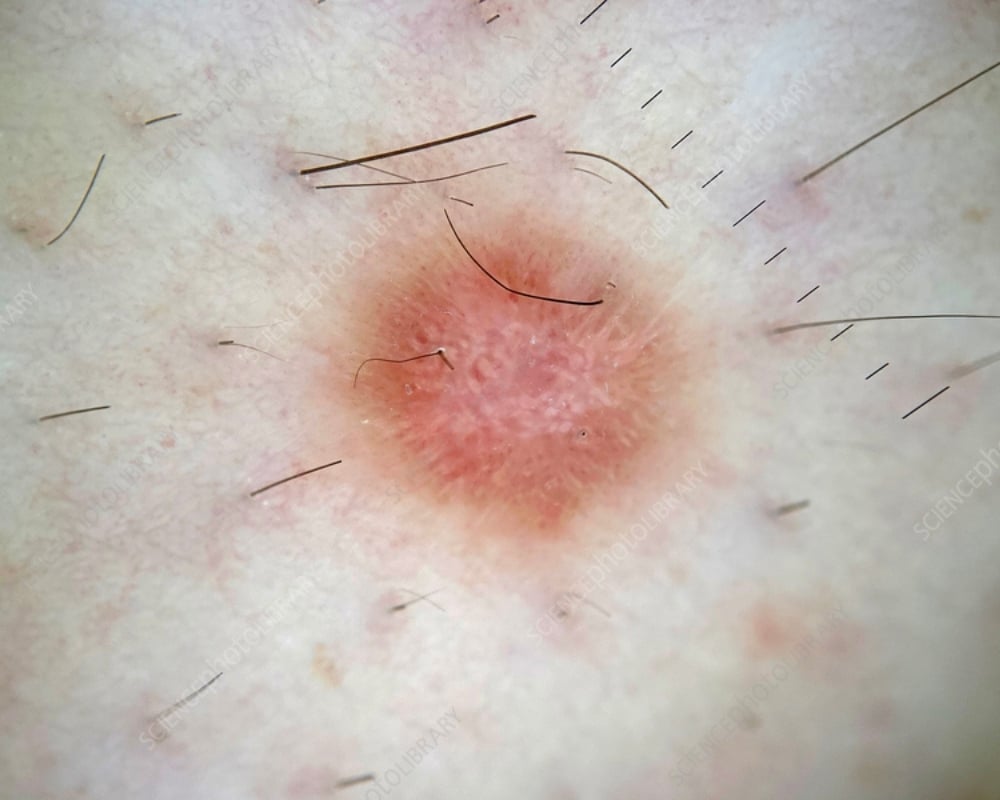
Treatment Options
At Cambridge Contour Clinic, we offer the following professional medical-grade treatment options for Dermatofibromas.
Micro-Plasma Removal
We use a surgical-grade micro-plasma device, which creates a precise plasma arc (~0.02 mm accuracy) to vaporise the lesion tissue.
Cryotherapy
Using a fine jet of N₂O under high pressure, we freeze the lesion with millimetre precision.
Which is most suitable for you is best discussed within a consultation with one of our specialists, where they will discuss your treatment options, check you are able to have said treatments (i.e there are no health contraindications). They will also discuss healing and success rates, check that you are happy with any potential risks and address any necessary pre-care, post-care, treatment plans and pricing.
Other Potential Treatment Options
Here at Cambridge Contour Clinic, we focus on minimally invasive techniques to optimise healing and cosmetic outcomes. However, we believe in transparency to help our clients make an informed choice on how they would like to proceed. Therefore, if we are aware of other recognised treatment methods that may be suitable for you, we will discuss these during your consultation.
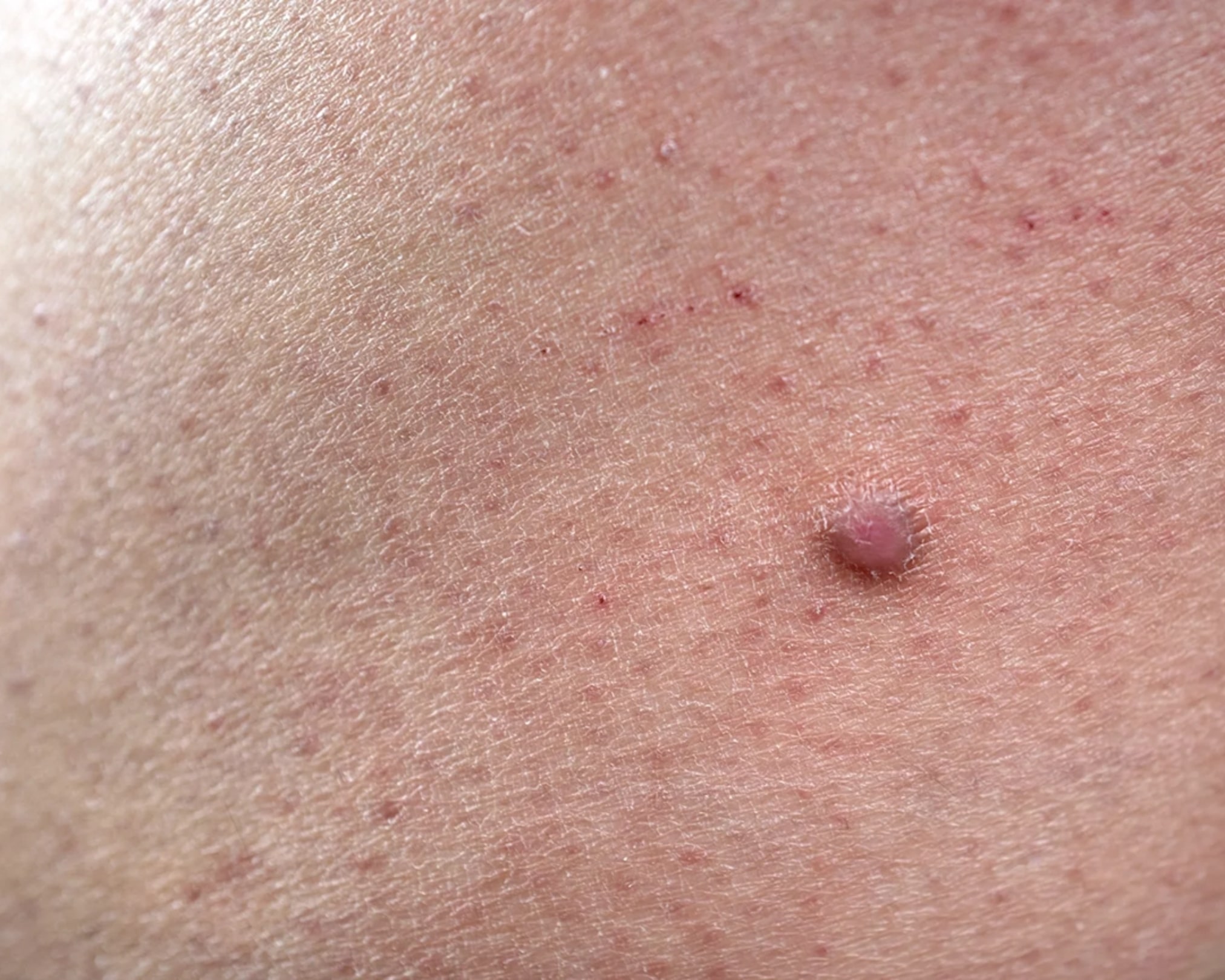
When to See a Specialist Review
While most Dermatofibromas are harmless, you should consult a dermatologist or skin specialist (or book a consultation with us) if you notice:
- If your lesion(s) change in shape, colour, size or bleed - this may require further investigation.
- If you are unsure if it is benign.
- If your lesion(s) are painful, itchy, or have an unusual appearance.
- You would like the removal of your lesion(s) for comfort or cosmetic reasons.
Dermatofibroma Frequently Asked Questions
Are Dermatofibromas cancerous?
No. Dermatofibromas are benign (non-cancerous) skin growths and do not turn into skin cancer.
Do Dermatofibromas go away on their own?
Most Dermatofibromas stay the same or flatten/darken slightly over time, but they generally do not disappear completely without treatment.
Are Dermatofibromas painful?
They are usually painless, but can become tender if knocked, itchy, or sensitive to touch, especially if located where clothing rubs.
Can skincare or medication get rid of it?
No skincare creams, supplements or topical medications have been proven to remove Dermatofibromas.