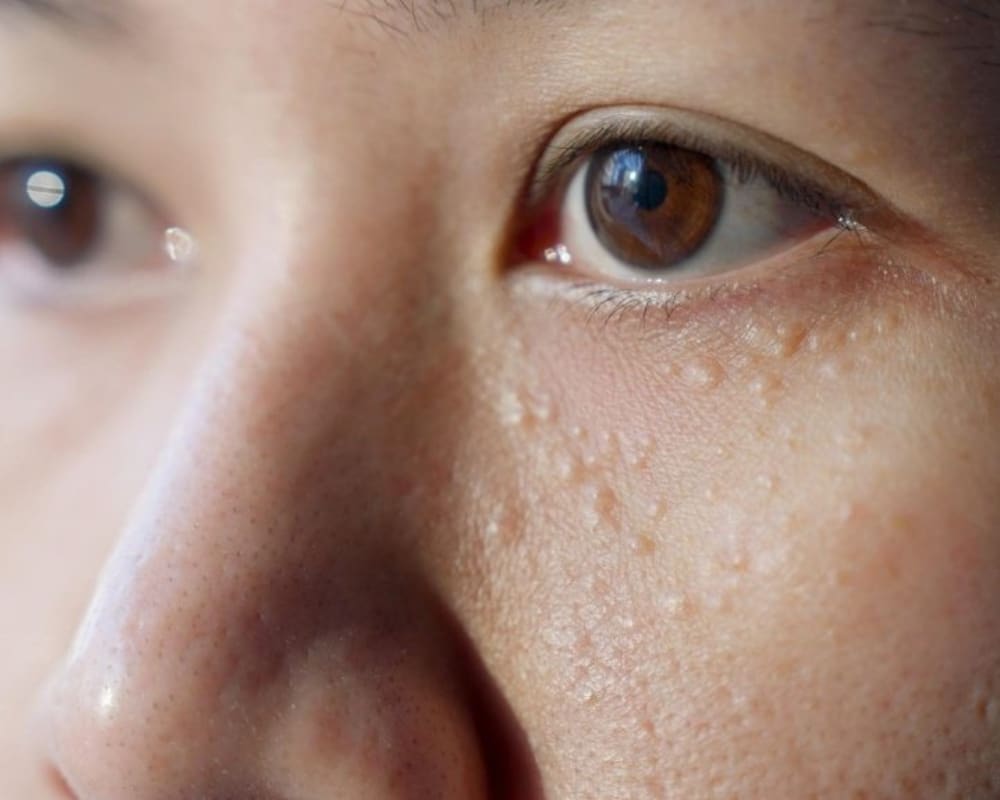
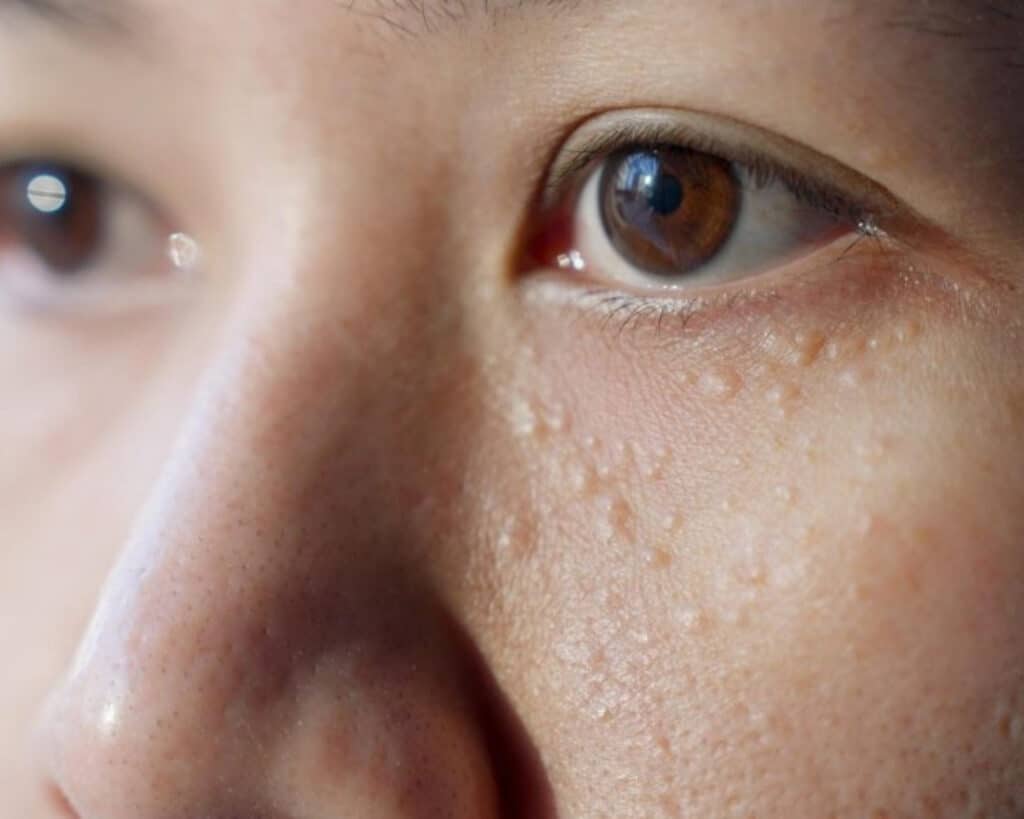

What is Milia?
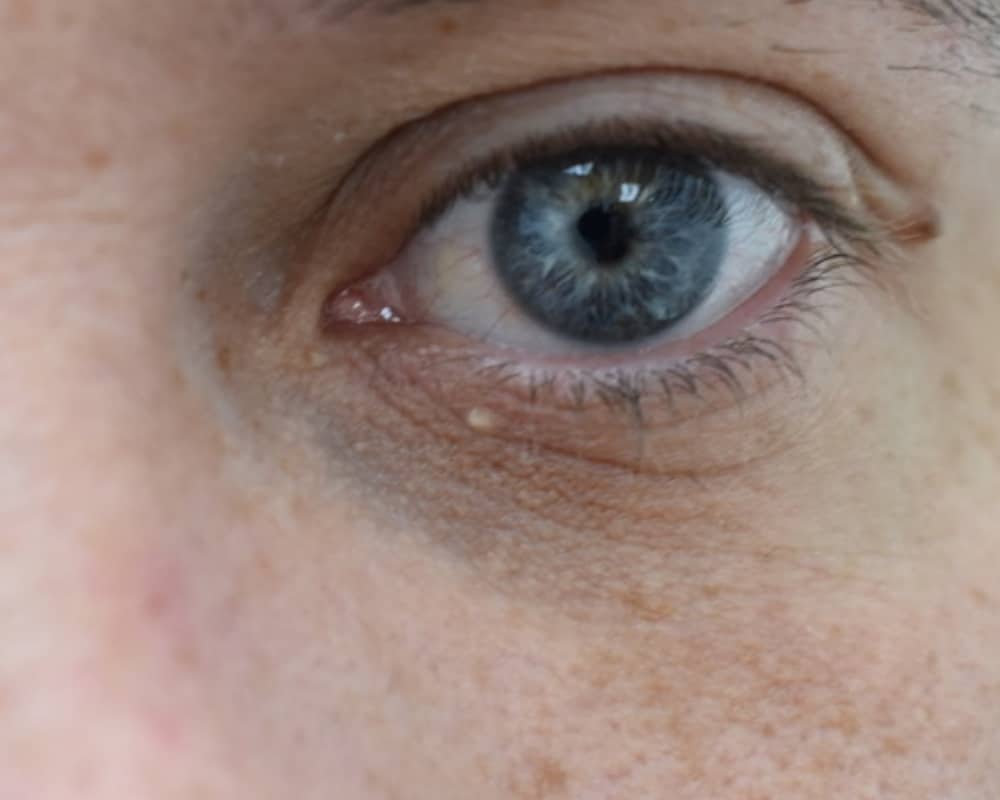
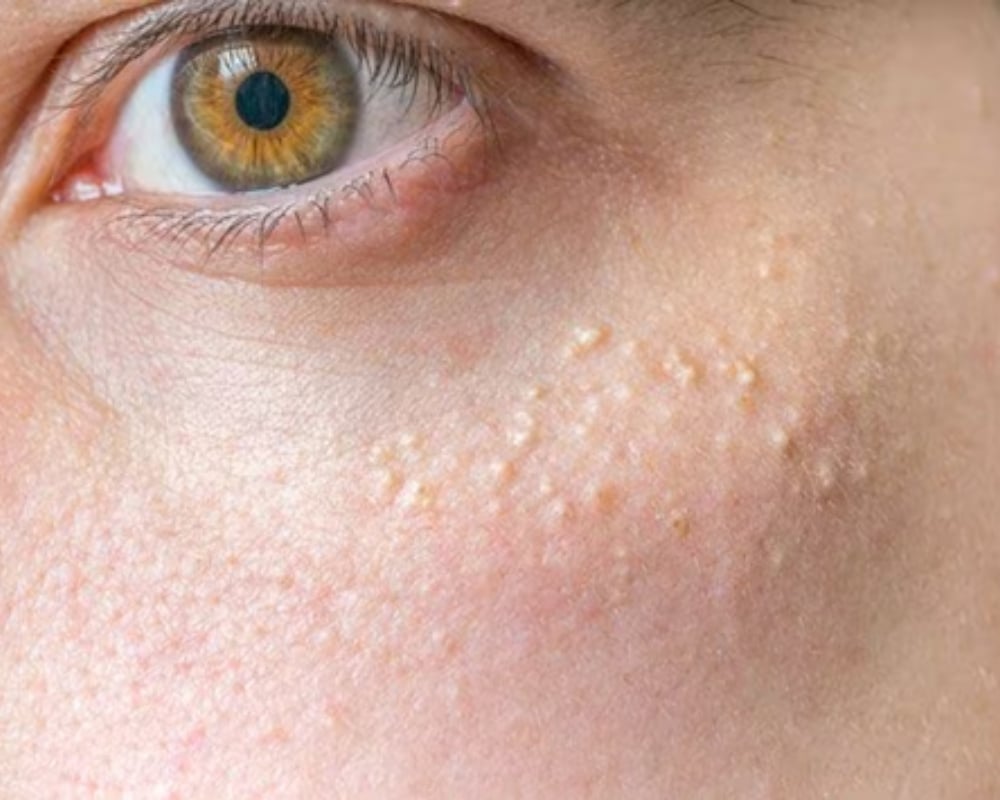
Milia (singular: milium) are harmless little cysts that often appear on the skin’s surface, causing small white or yellowish bumps. While entirely benign, they can be persistent or cosmetically unwelcome.
Key Identifying Features
- Typically 1–2 mm in diameter.
- Tiny pearly-white or yellowish-white bumps just beneath the skin surface.
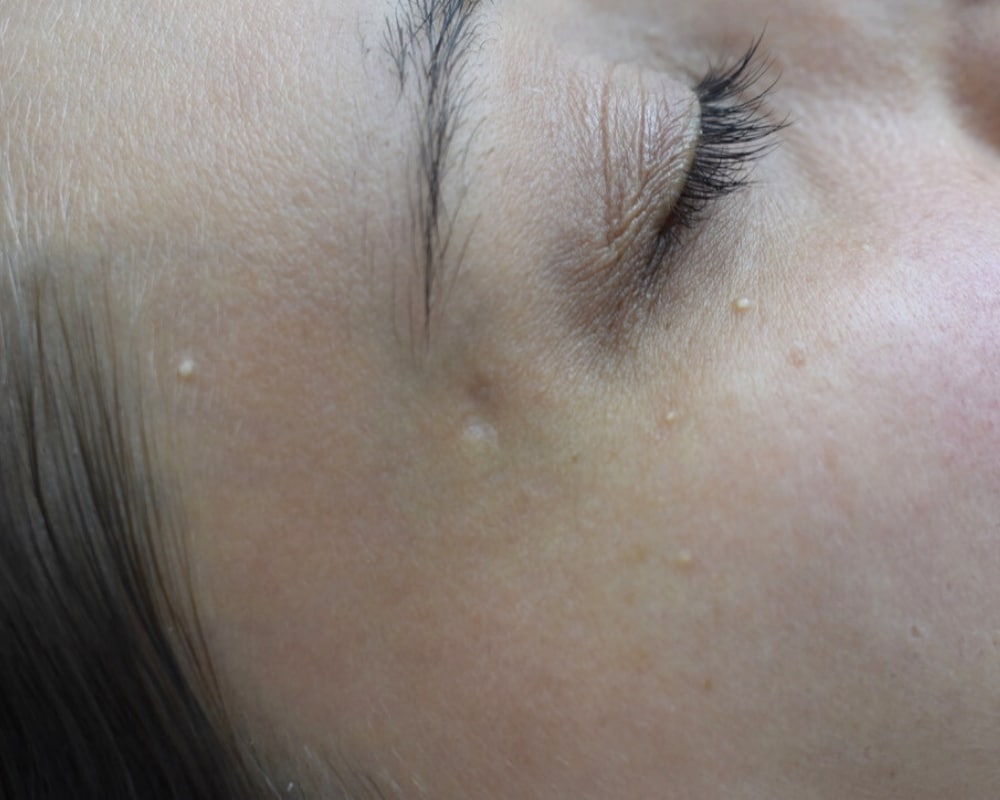
Where They Commonly Occur
Most often seen on the face, especially:
- Eyelids, cheeks, nose, and around the eyes, but can also appear elsewhere on the body.
- Secondary milia (i.e., those that develop after skin injury) can appear at sites of skin trauma, burns, dermabrasion or blistering rashes.
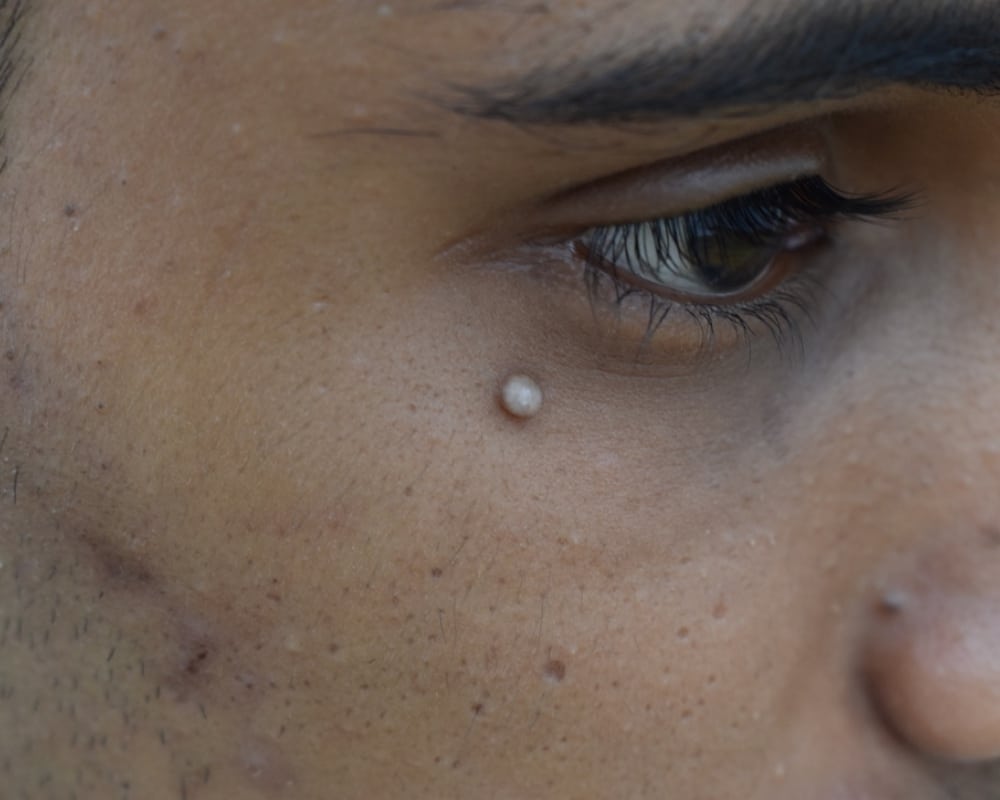
Prevalence
- Extremely common in newborns (neonatal milia) - considered a normal finding.
- In adults and children: fairly common, though exact prevalence figures vary.
- They occur across both sexes and all ages.
Contributing Factors
- Ageing skin: In older skin, the natural exfoliation process is slower, which may contribute to milia formation.
- Use of heavy occlusive creams or products (especially around the eyes) may contribute in some cases.
- Skin trauma or damage (burns, blistering, surgical/laser procedures) may lead to secondary milia.
Treatments we offer
At Cambridge Contour Clinic, we specialise in benign skin lesion assessment and removal, including milia. Treatment is tailored to your skin type, the location of milia, and your personal preferences.
Lancing / drainage - a minor incision followed by manipulating the area (i.e squeezing) removes milia contents.
Micro-Plasma Removal
We use a surgical-grade micro-plasma device, which creates a precise plasma arc (~0.02 mm accuracy) to vaporise the lesion tissue. This is sometimes used to break the skin in a similar fashion to lancing.
Which is most suitable for you is best discussed within a consultation with one of our specialists, where they will discuss your treatment options, check you are able to have said treatments (i.e there are no health contraindications). They will also discuss healing and success rates, check that you are happy with any potential risks and address any necessary pre-care, post-care, treatment plans and pricing.
Other Potential Treatment Options
Here at Cambridge Contour Clinic, we focus on minimally invasive techniques to optimise healing and cosmetic outcomes. However, we believe in transparency to help our clients make an informed choice on how they would like to proceed. Therefore, if we are aware of other recognised treatment methods that may be suitable for you, we will discuss these during your consultation.
Milia Frequently Asked Questions
Will my milia go away on their own?
Potentially - especially in newborns, where neonatal milia often resolve within a few weeks. In adults, they may persist for months or longer.
Can I remove them myself by squeezing/picking?
No - you should not try to squeeze or pick milia yourself. DIY removal risks infection, scarring or pigment changes.
Could these be something more serious?
While milia are benign, any new, changing, pigmented or irregular bump should be assessed by a professional to rule out other skin lesions.
Can new milia develop after treatment?
Potentially - removal treats the existing lesion but does not always prevent new milia from forming, especially if underlying skin factors remain. We provide after-care advice to reduce recurrence risk.