What is a Verruca?
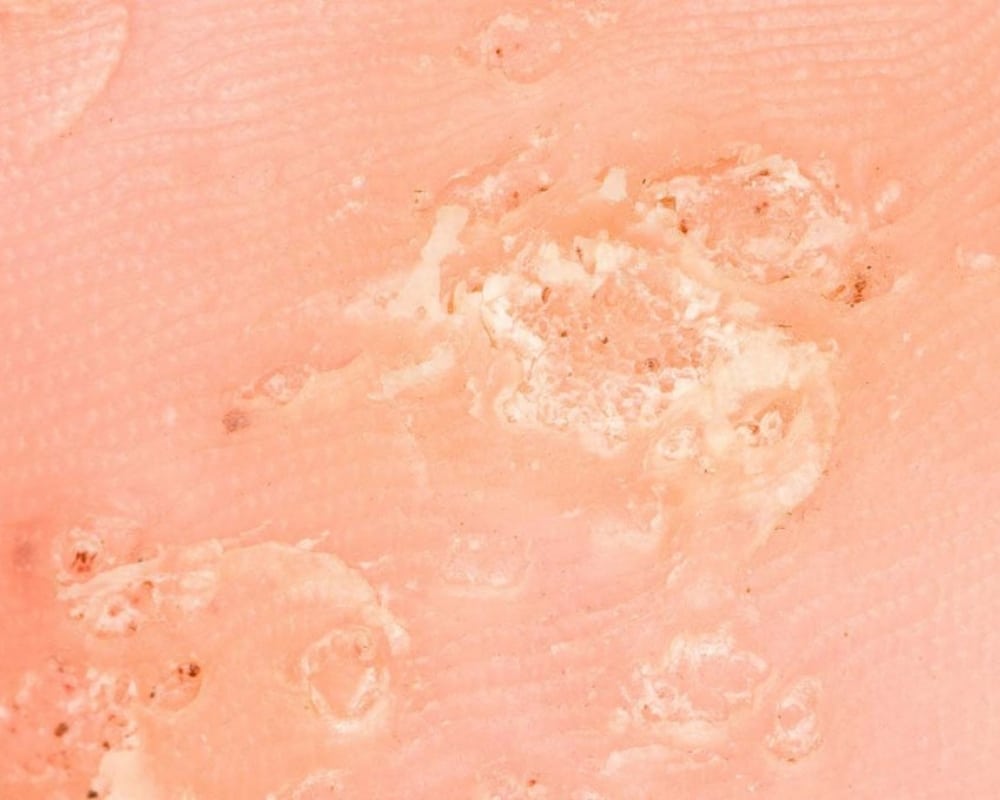
A verruca is a type of wart that develops on the foot when the skin becomes infected with human papillomavirus (HPV).
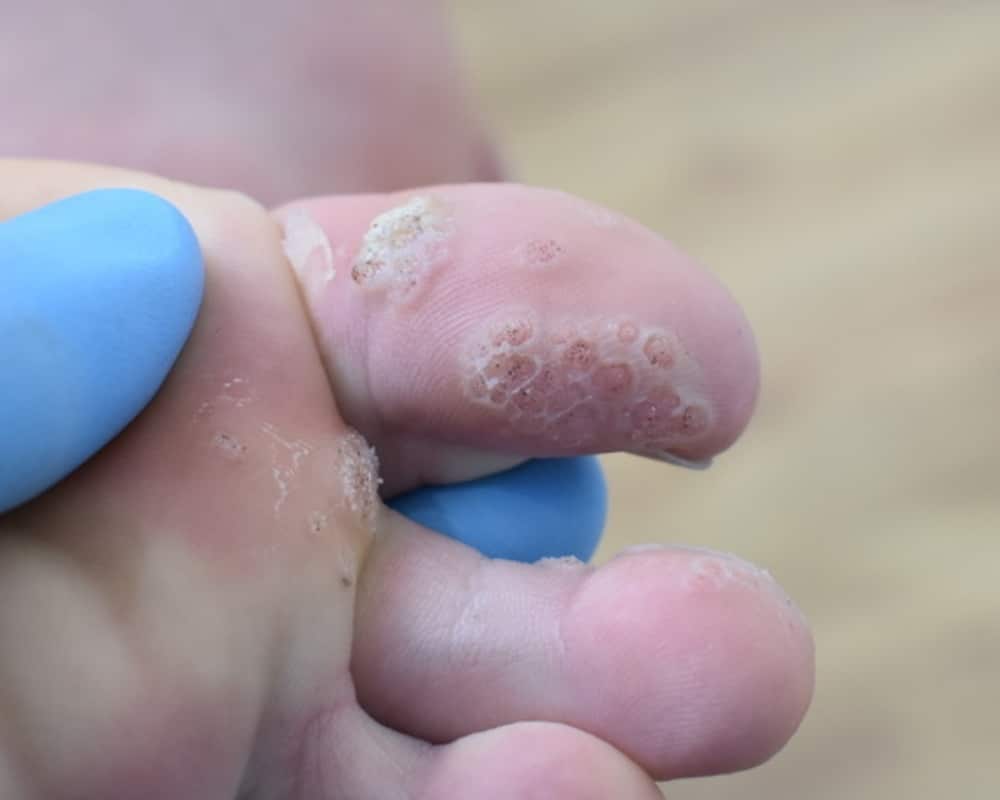
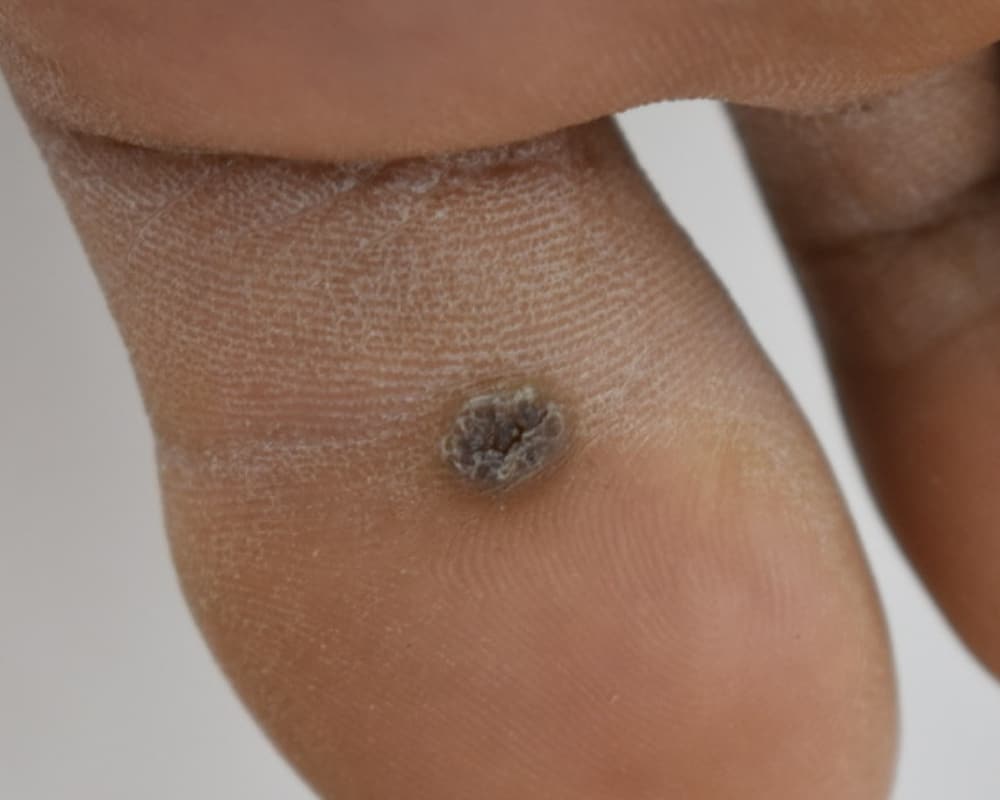
They often appear on weight-bearing areas of the feet - such as the heel, ball of the foot or toes - and can range from small, flat patches to larger, painful lesions.
Although verrucae are benign (non-cancerous) and sometimes resolve on their own, they can become uncomfortable, spread to nearby skin, or persist for months or years - particularly in adults.

Key Features
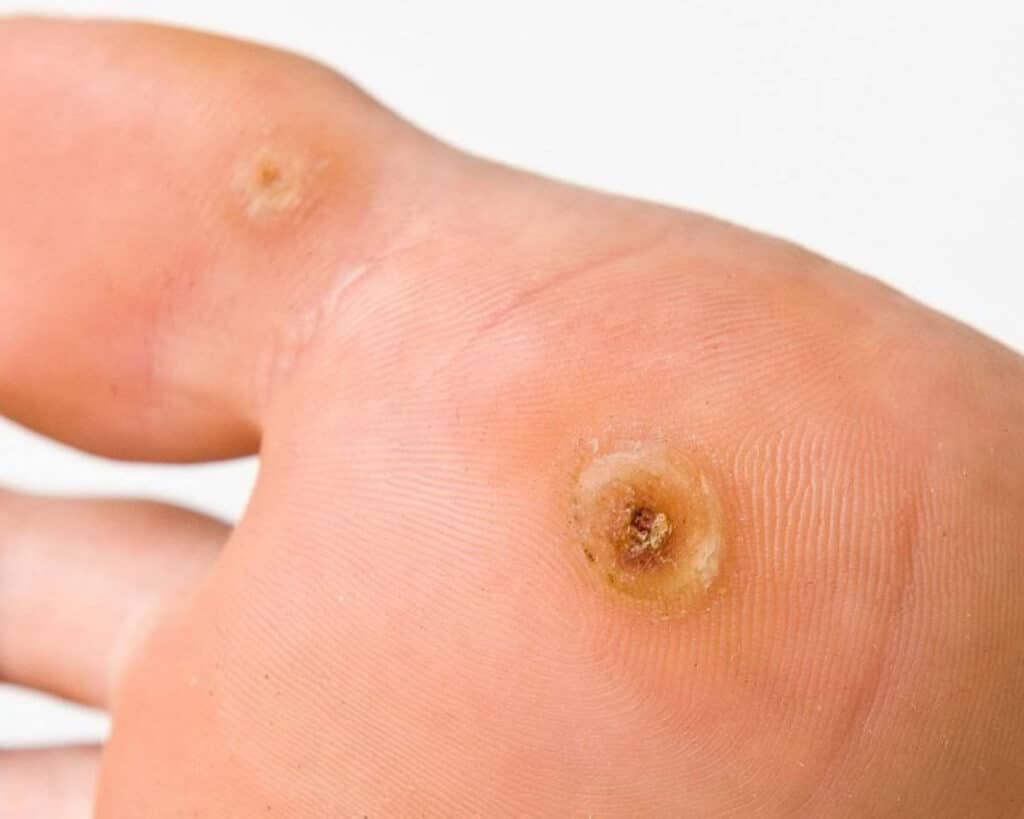
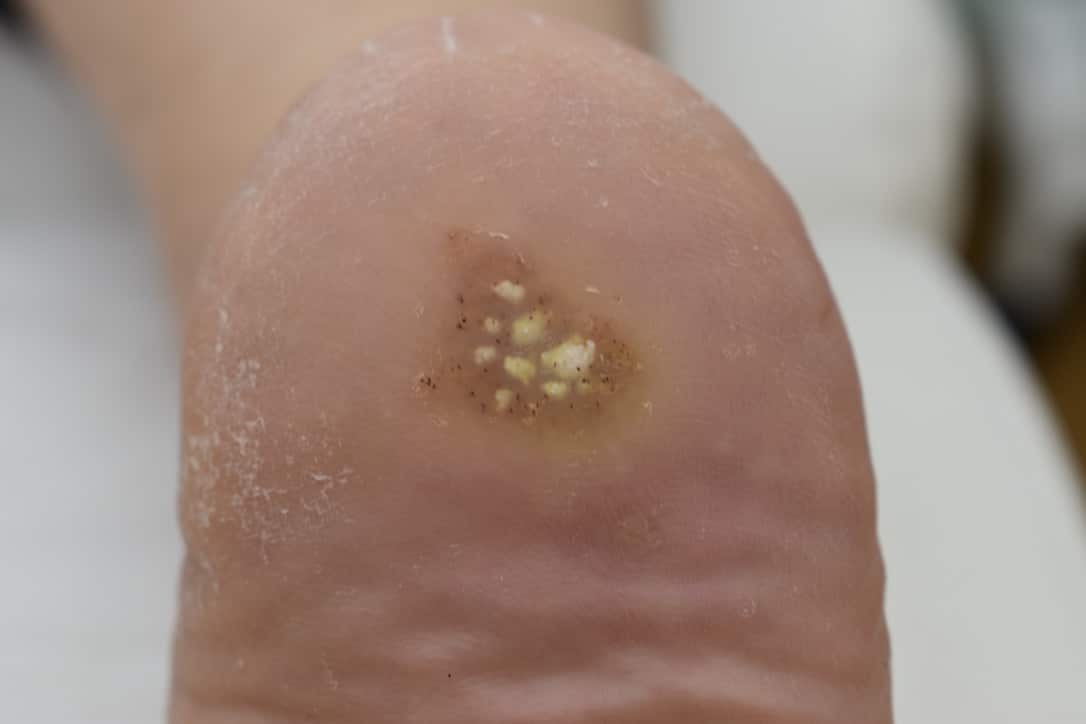
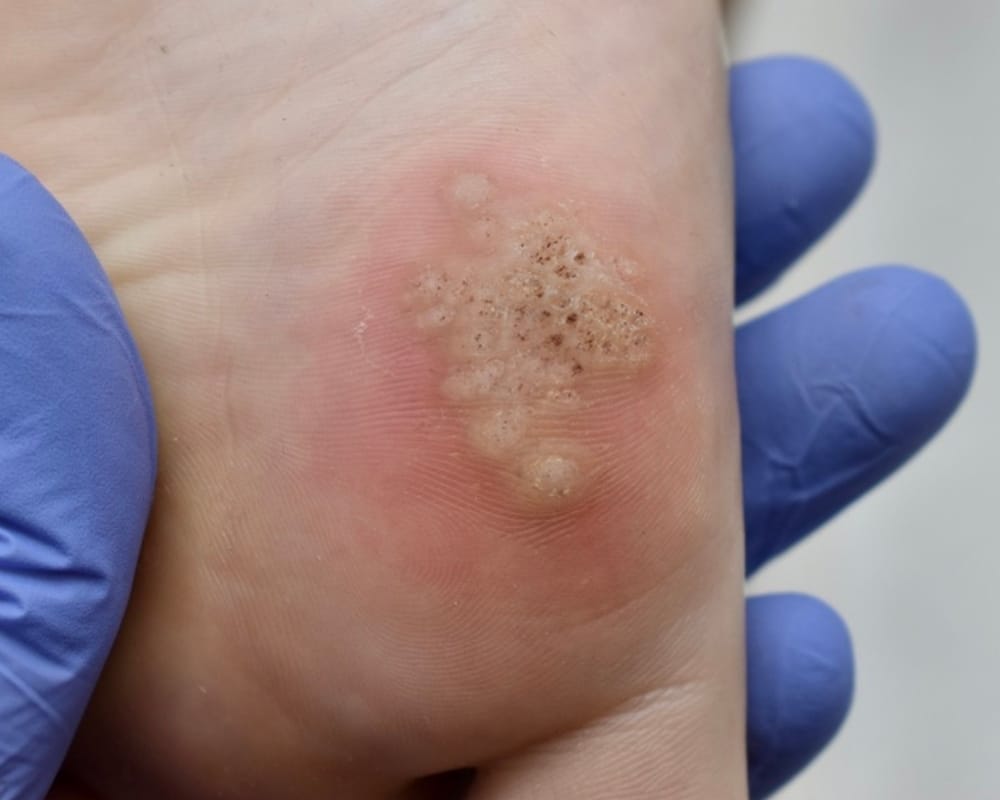
- Typically appears as a flat or slightly raised patch of rough skin on a weight-bearing area (for example, the ball of the foot, heel or side of the toes).
- It often has a distinct appearance of tiny black dots within the lesion - these are small blood vessels.
- The surface may be surrounded by a rim of hard, thickened skin (callus), especially in adults.
- Size varies: often around 1 cm in diameter, but can be larger or in clusters of smaller verrucae.
Where They Commonly Occur
- Soles of the feet
- Toes and toe sides
- Areas of the foot that experience pressure or friction
Contributing factors
You’re more likely to develop a Verruca if:
- The skin is damaged or softened (after swimming, showering, sweating)
- You go barefoot in communal areas (swimming pools, gyms, changing rooms)
- You share socks, towels, or shoes
- You have reduced immunity (temporary or long-term)
- You have persistent moisture in your footwear
- If the immune system is weakened, warts/ verrucae may be more persistent
Prevalence
- Warts (including verrucae) are common - for example, about one in ten people in the UK may have a wart at any one time.
- They are particularly common in children, teenagers and young adults, but adults can also be affected.
- Because the feet are subject to pressure and moisture, verrucae can persist longer in adults.
Treatment Options
At Cambridge Contour Clinic for warts and viral/HPV related lesions, we typically offer:
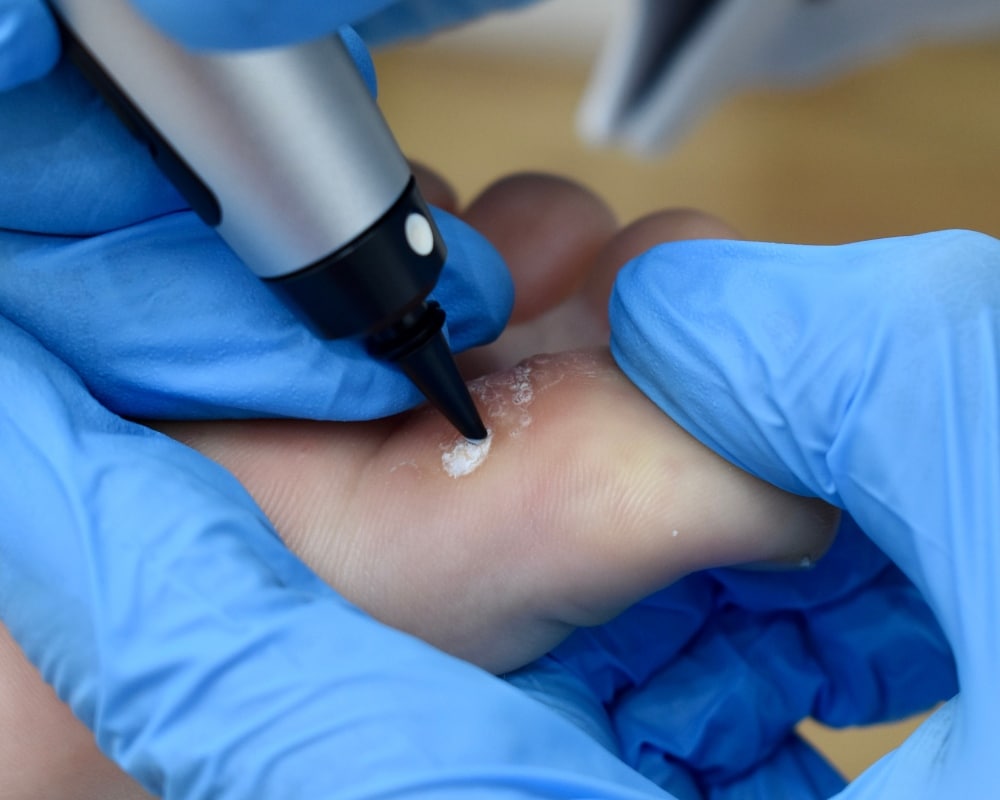
Cryotherapy
Using a fine jet of N₂O under high pressure, we freeze the lesion with millimetre precision.
Whether this is most suitable for you is best discussed within a consultation with one of our specialists, where they will discuss your treatment options, check you are able to have said treatments (i.e there are no health contraindications). They will also discuss healing and success rates, check that you are happy with any potential risks and address any necessary pre-care, post-care, treatment plans and pricing.
Other Potential Treatment Options
Here at Cambridge Contour Clinic, we focus on minimally invasive techniques to optimise healing and cosmetic outcomes. However, we believe in transparency to help our clients make an informed choice on how they would like to proceed. Therefore, if we are aware of other recognised treatment methods that may be suitable for you, we will discuss these during your consultation.
How to prevent Verrucae
- Wear flip-flops or pool shoes in communal wet areas
- Cover any existing verruca with a waterproof plaster when barefoot around others
- Keep feet clean and dry, change socks daily
- Avoid sharing towels, socks or shoes
- Do not pick or scratch the lesion (this increases spread)
When to see a specialist
You may want to consider a professional review if:
- The verruca is painful, spreading, or not improving
- It is affecting walking, sports, or daily activities
- You’re not sure whether the lesion is a verruca or something else
- Over-the-counter treatments have not worked
Verrucea Frequently Asked Questions
Will my Verruca definitely go away if I don’t do anything?
Possibly - many Verrucae clear naturally, particularly in younger people. However, they may persist for months or years, and in adults, may take longer.
Is the NHS likely to remove it for me?
Because Verrucae are benign, removal is often not funded unless they cause significant functional issues.
Will treatment hurt / leave a scar?
Scarring risk is low with our approach - healing expectations will be discussed during your consultation.
Can it come back after removal?
Potentially, because the virus may still be present, recurrence is possible. Good after-care helps reduce this risk.
Are Verrucae contagious?
Yes. They spread by direct or indirect contact on surfaces, especially in wet communal spaces.
How can I stop spreading it or catching it again?
Key steps: cover the lesion with a waterproof plaster in communal spaces; avoid walking barefoot in shared showers/changing rooms; don’t share towels, socks or shoes; keep feet dry; change socks daily if Verruca present.