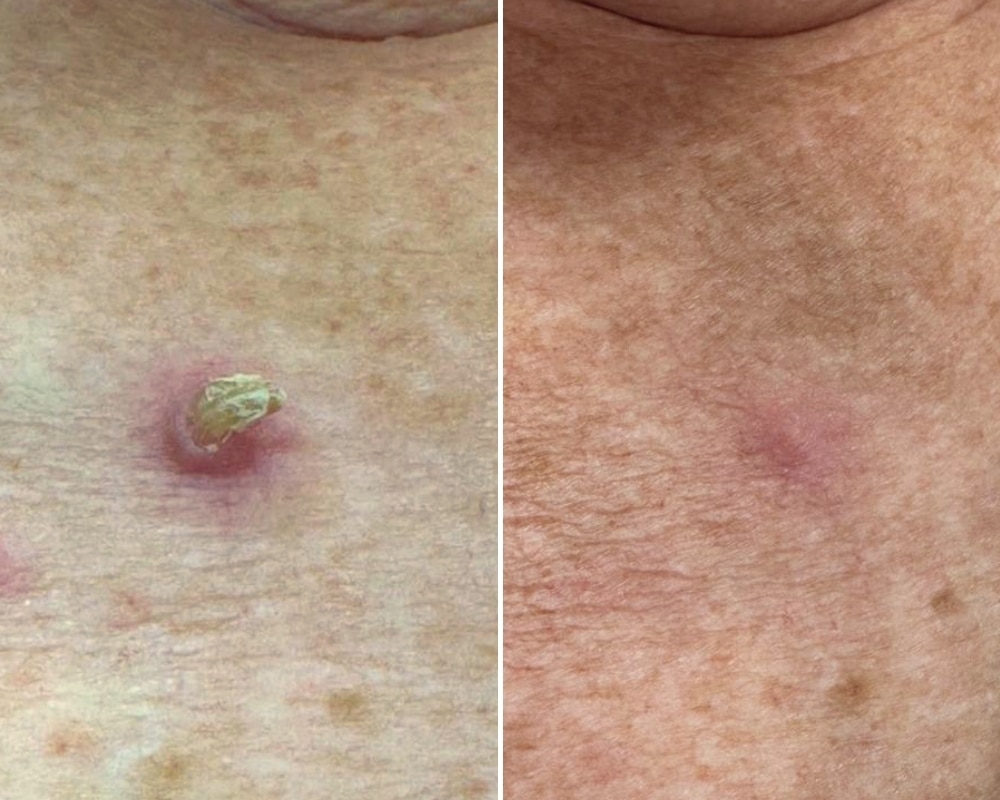

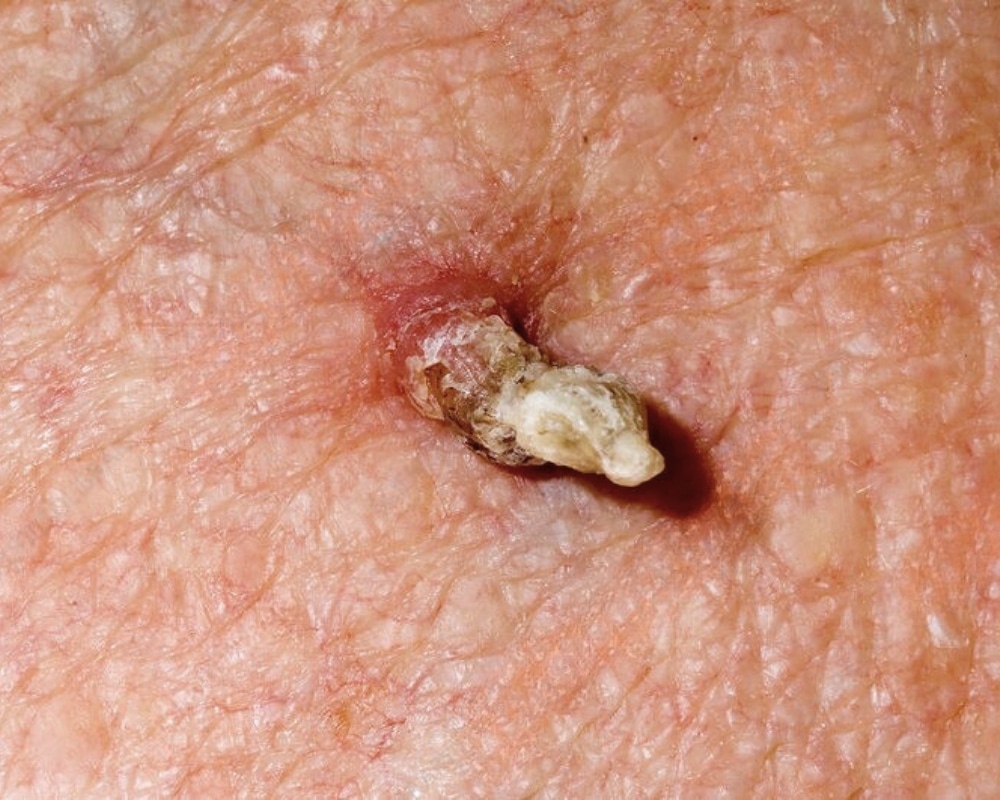
What is a Cutaneous Horn?
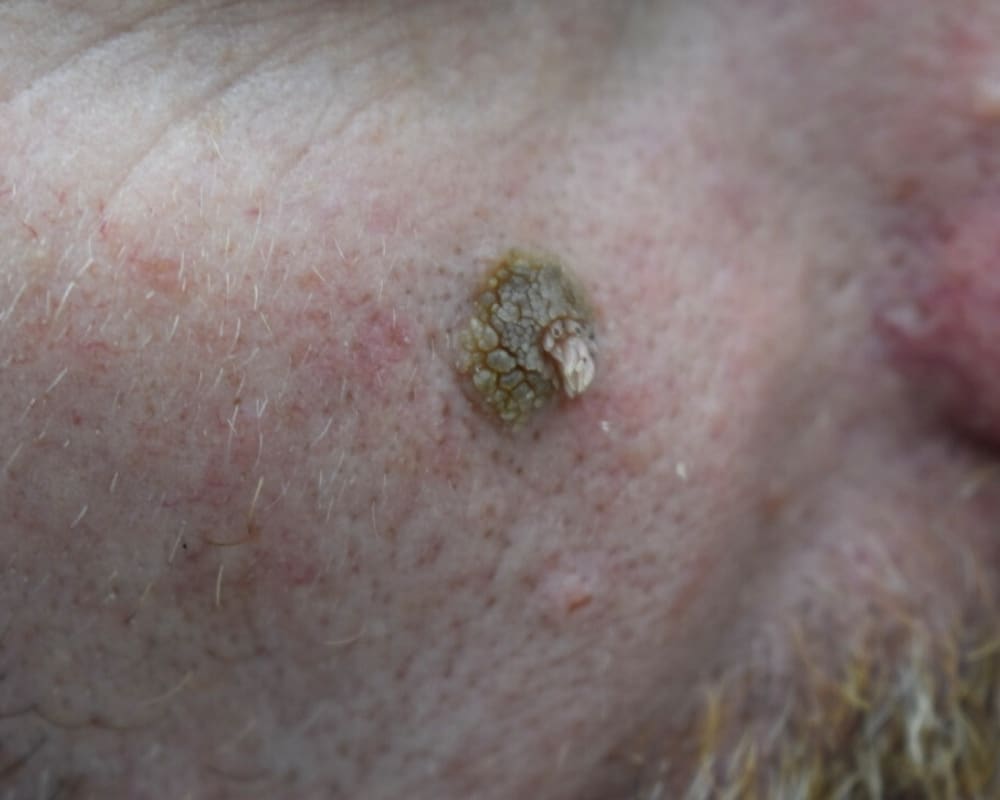
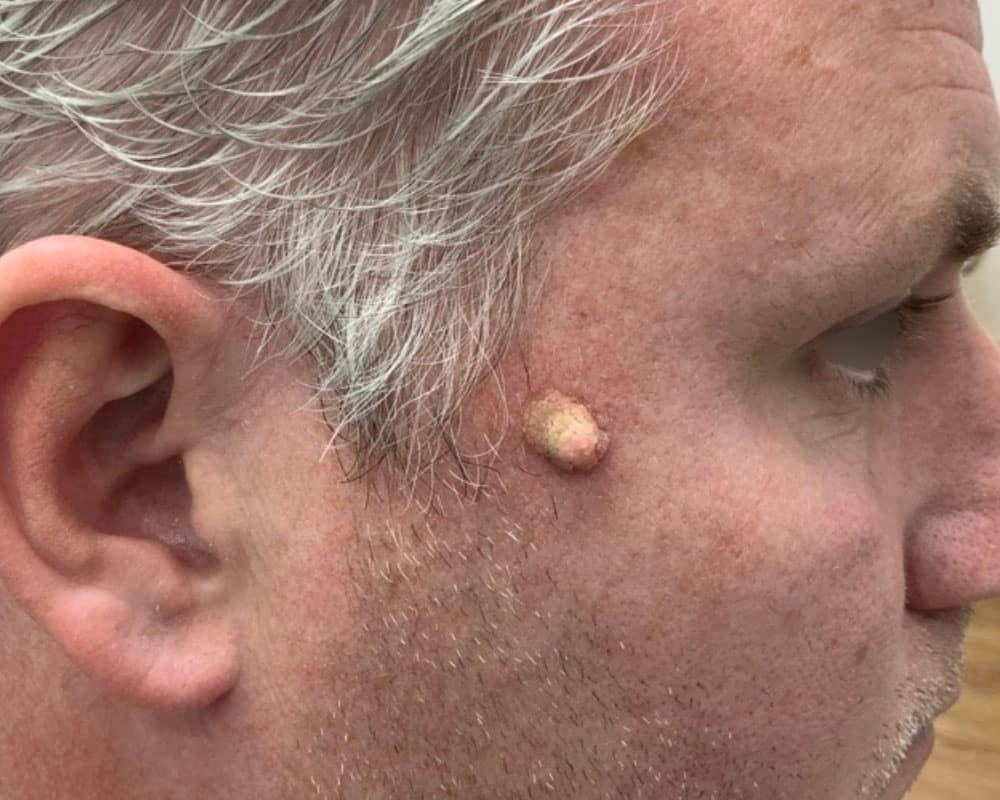
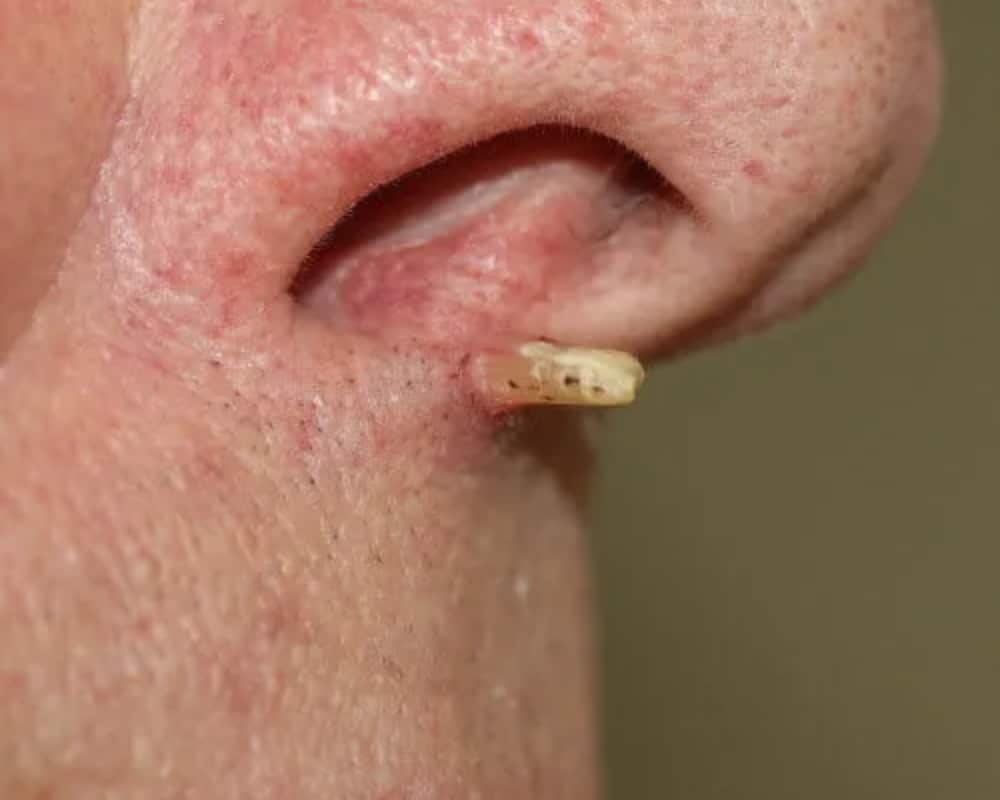
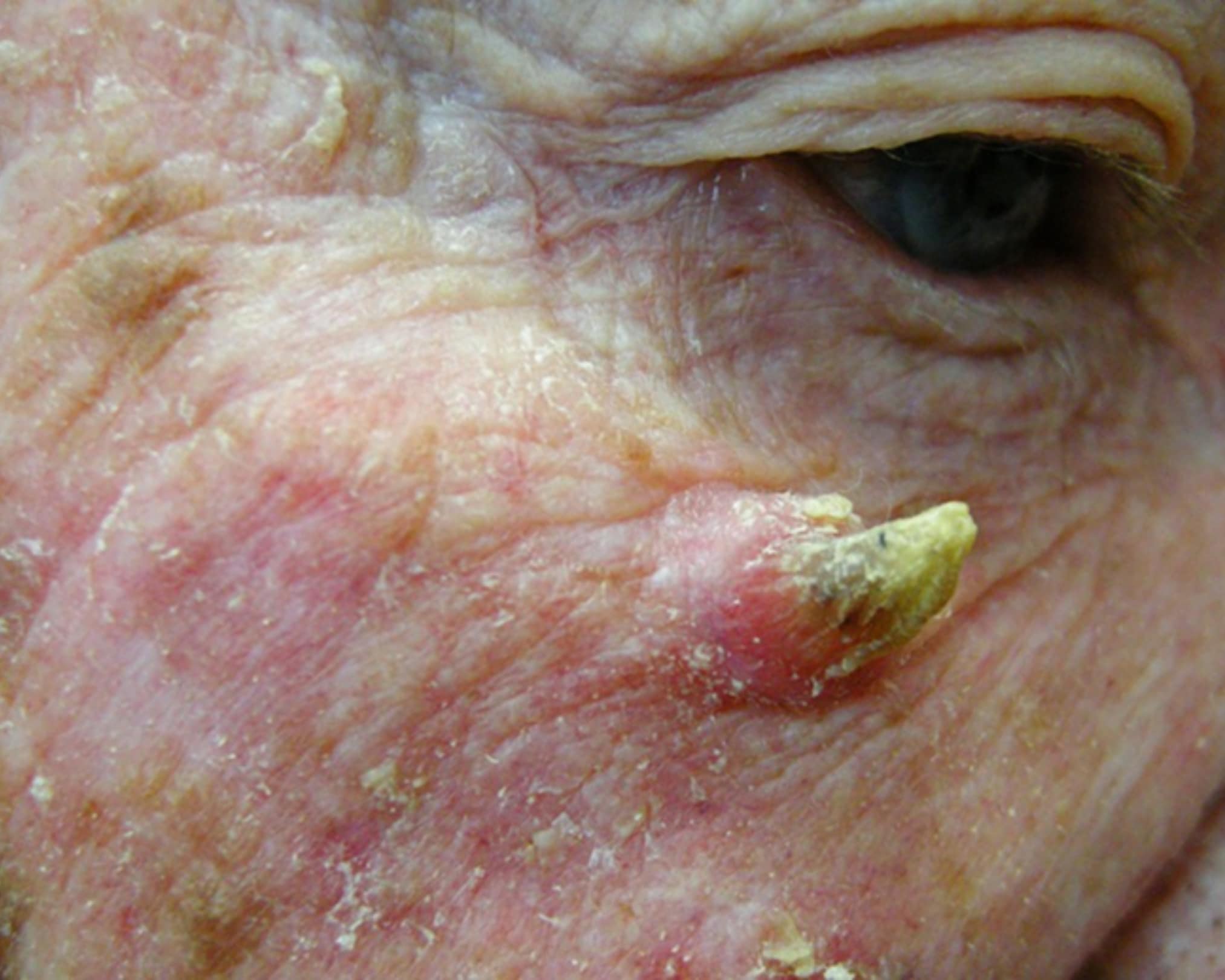
A cutaneous horn is a firm, cone-shaped projection of compacted keratin — the same material that makes up nails and hair. It typically appears as a yellow, brown or skin-coloured horn-like growth projecting above the skin surface.
Although the horn itself is made of harmless keratin, the underlying tissue at the base is what matters clinically. Most cutaneous horns arise from benign skin lesions, but some originate from pre-cancerous conditions (e.g., actinic keratosis/Bowen’s disease) or skin cancer (most commonly squamous cell carcinoma) - therefore, prompt assessment is recommended.
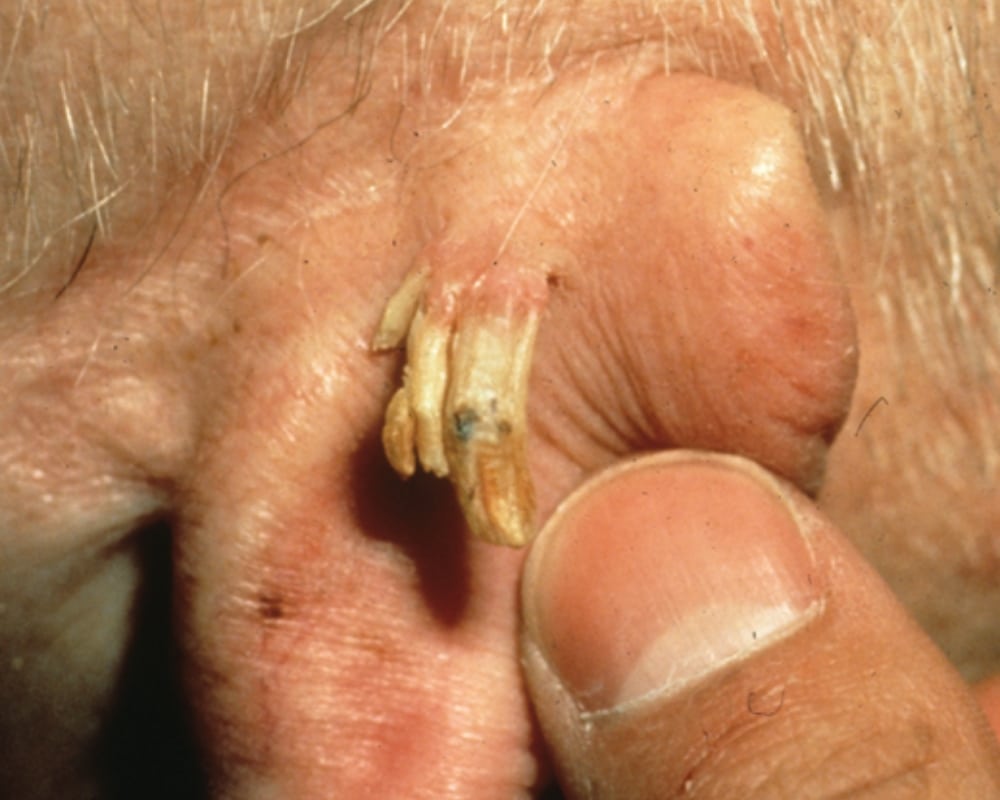
Key Identifying Features
- Firm, conical, yellow/ brownish lesion protruding above the skin.
- Size from a few millimetres to several centimetres.
- Often, a singular lesion arises from sun-exposed areas.
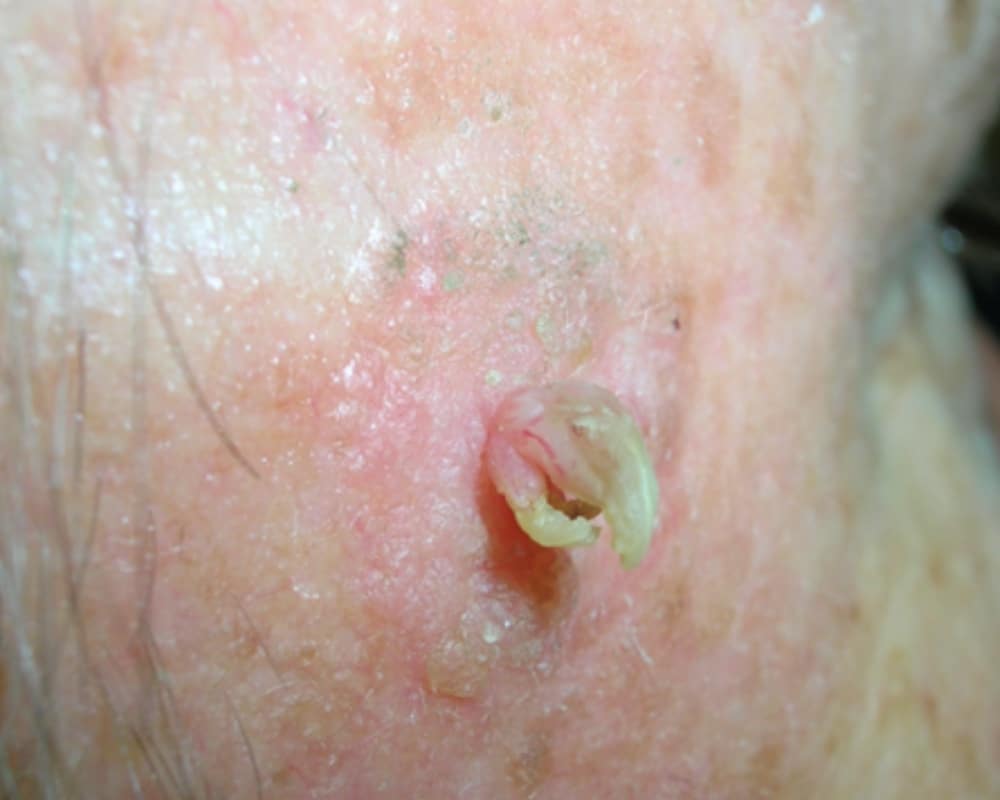
Where They Commonly Occur
Most often on sun-exposed areas, including:
- Face
- Scalp
- Ears
- Back of hands
- Forearms

Contributing Factors
- Cumulative ultraviolet (UV) exposure / sun-damaged skin.
- Older age and fair skin types.
- Underlying lesions: actinic keratosis, seborrhoeic keratosis, viral wart (HPV), or squamous cell carcinoma can be the base beneath a horn.
- Local irritation or prior trauma may also play a role.
Prevalence
Most cases are seen in older adults (commonly 60 - 80 years).
While many horns are benign, a variable proportion (estimates ~16 - 40% across research) have premalignant or malignant tissue at the base. This is why examination and, if premalignant or malignant tissue is present, a biopsy is necessary.
Treatment Options
At Cambridge Contour Clinic, we offer the following professional medical-grade treatment options for Cutaneous horns.
Micro-Plasma Removal
We use a surgical-grade micro-plasma device, which creates a precise plasma arc (~0.02 mm accuracy) to vaporise the lesion tissue.
Cryotherapy
Using a fine jet of N₂O under high pressure, we freeze the lesion with millimetre precision.
Which is most suitable for you is best discussed within a consultation with one of our specialists, where they will discuss your treatment options, check you are able to have said treatments (i.e there are no health contraindications). They will also discuss healing and success rates, check that you are happy with any potential risks and address any necessary pre-care, post-care, treatment plans and pricing.
Other Potential Treatment Options
Here at Cambridge Contour Clinic, we focus on minimally invasive techniques to optimise healing and cosmetic outcomes. However, we believe in transparency to help our clients make an informed choice on how they would like to proceed. Therefore, if we are aware of other recognised treatment methods that may be suitable for you, we will discuss these during your consultation.
Prevention
While not all cutaneous horns are preventable, the risk can be reduced by:
- Daily sunscreen on exposed skin areas
- Protective clothing & hats during strong UV exposure
- Regular skin checks, especially for people with a history of sun damage or multiple skin lesions
- Avoiding tanning beds
These measures also support overall skin health and can help reduce the development of UV-related lesions.
When to See a Specialist Review
It is advised that you seek medical evaluation promptly if the lesion shows:
- Rapid growth,
- Bleeding, persistent pain, ulceration,
- Hardening or thickening at the base, or a sudden change in appearance.
These signs raise suspicion for squamous cell carcinoma and require biopsy/histopathology.
You may also wish to see a specialist if you would like the removal of your lesion for comfort or cosmetic reasons.
If we see any suspicious signs at Cambridge Contour Clinic, we will not perform cosmetic removal and will recommend appropriate onward referral.
Cutaneous Horn Frequently Asked Questions
Will the removal at your clinic also check for cancer?
No - Cambridge Contour Clinic does not provide in-house histopathology / laboratory histology services. If cancer is suspected or you want a definitive diagnosis, you should have excision/biopsy with histopathology; we will advise/referral to get this.
Will removal leave a scar?
Any removal can leave a scar. We will discuss expected healing, scar management and realistic cosmetic outcomes before treatment.
Can a cutaneous horn come back after removal?
Recurrence depends on the underlying lesion. If the base lesion is not fully treated, recurrence is possible.
How soon can I be seen for an appointment?
Typically within 5 working days. You are more than welcome to book online, email through our contact form or call the clinic, and we will be happy to help.