


What are cherry angiomas?
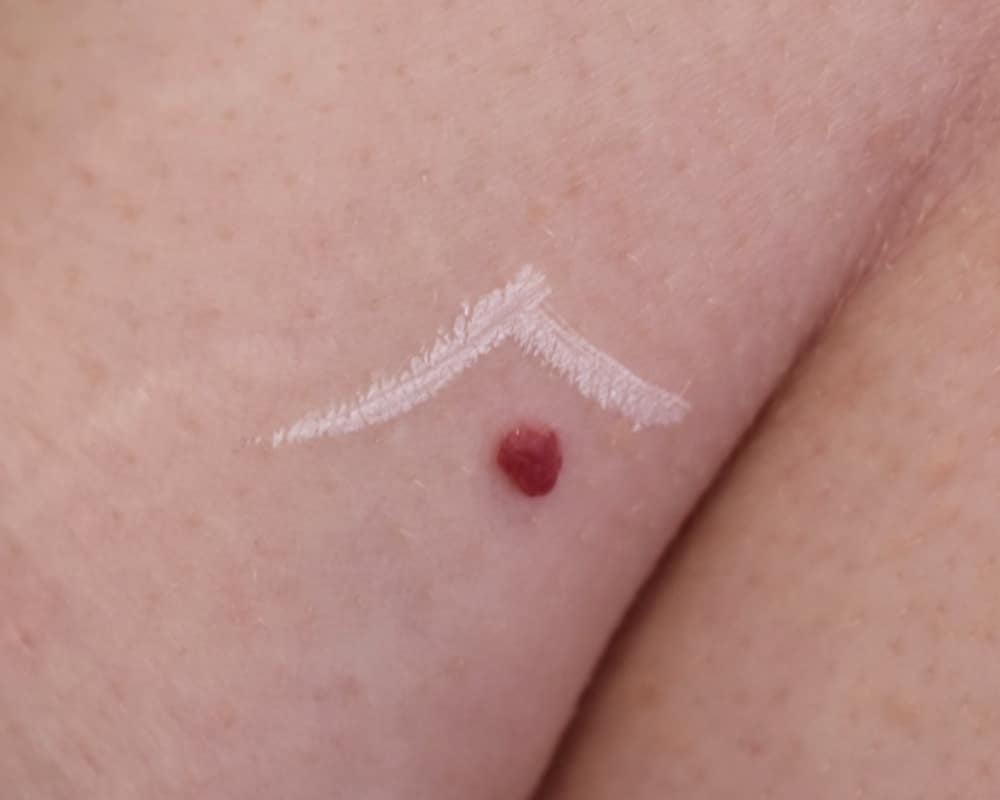
Cherry angiomas are common benign skin growths formed by small clusters of dilated blood vessels (capillaries) near the surface of the skin. They appear as smooth or slightly raised red, purple, or cherry-coloured dots, most often on the trunk, arms, or shoulders.
They are harmless and non-cancerous, but some individuals choose to have them treated for aesthetic reasons or if they are prone to irritation or bleeding (for example, when caught on clothing or during shaving).

Key Identifying Features
- Bright red, cherry-coloured or sometimes purplish dome-shaped or flat spot.
- Usually 1 mm to 5 mm in size; may slowly enlarge.
- Frequently, multiple (rather than just one) in many individuals.
- Asymptomatic in most cases (no pain or itch) unless irritated or traumatised.
- Benign, no malignant potential; however, any sudden change in colour, size or bleeding merits review.

Where They Commonly Occur
Cherry angiomas can appear on almost any skin surface, but they are most commonly found on:
- The front and back of the trunk (chest and abdomen).
- The upper arms and legs.
- Less commonly, they appear on the head, neck or hands/feet.


Contributing Factors
Although the exact cause of cherry angiomas remains unknown, research has identified a number of contributing factors:
- Age: The incidence increases markedly with age; many people over 40 start developing them, and by age 75, a large proportion of adults will have at least one
- Genetics: Family history is common; somatic mutations (in genes such as GNAQ and GNA11) have been identified in some lesions.
- Hormonal changes: They may appear or increase in number during pregnancy or with hormonal fluctuations.
- Chemical/Environmental exposure: There is some evidence linking exposure to certain chemicals (for example, 2-butoxyethanol) and eruptive cases.
- Skin phenotype / sex / race: Studies suggest fairer skin and certain ancestry may have higher counts; more common in men overall, though women may have more on their legs.
Prevalence
They are extremely common; studies estimate that more than 70% of adults over 40 have at least one. They can appear gradually and tend to increase with age.

Treatment Options
Cherry angiomas are medically harmless, so removal is optional. People often choose removal for cosmetic reasons, comfort, or peace of mind if they change appearance or catch on clothing.
Micro-Plasma Removal
We use a surgical-grade micro-plasma device, which creates a precise plasma arc (~0.02 mm accuracy) to vaporise the lesion tissue.
Cryotherapy
Using a fine jet of N₂O under high pressure, we freeze the lesion.
Which is most suitable for you is best discussed within a consultation with one of our specialists, where they will discuss your treatment options, check you are able to have said treatments (i.e there are no health contraindications). They will also discuss healing and success rates, check that you are happy with any potential risks and address any necessary pre-care, post-care, treatment plans and pricing.
Other Potential Treatment Options
Here at Cambridge Contour Clinic, we focus on minimally invasive techniques to optimise healing and cosmetic outcomes. However, we believe in transparency to help our clients make an informed choice on how they would like to proceed. Therefore, if we are aware of other recognised treatment methods that may be suitable for you, we will discuss these during your consultation.

When to Seek Specialist Review
While most cherry angiomas are harmless, you should consult a dermatologist or skin specialist (or book a consultation with us) if you notice:
- If your lesion(s) change in shape, colour, size or bleed - this may require further investigation.
- Many new angiomas appear in a short time (an eruptive pattern).
- If your lesion(s) are painful, itchy, or have an unusual appearance.
- You would like the removal of your lesion(s) for comfort or cosmetic reasons.
Cherry Angiomas Frequently Asked Questions
Are cherry angiomas dangerous?
No. They are benign (non-cancerous) vascular growths. However, if a lesion changes shape, colour, or bleeds frequently, we recommend medical review before cosmetic removal.
Is removal painful?
No - we use a local anaesthetic if necessary for the treatment type for minimal discomfort.
Will it leave a scar?
There is a very low risk if aftercare guidance is followed.
Can they come back?
Treated angiomas don’t return, but new ones may develop over time due to natural skin ageing.
Do I need a GP referral?
No. Private consultation and treatment can be booked directly.