

What is Actinic Keratosis?
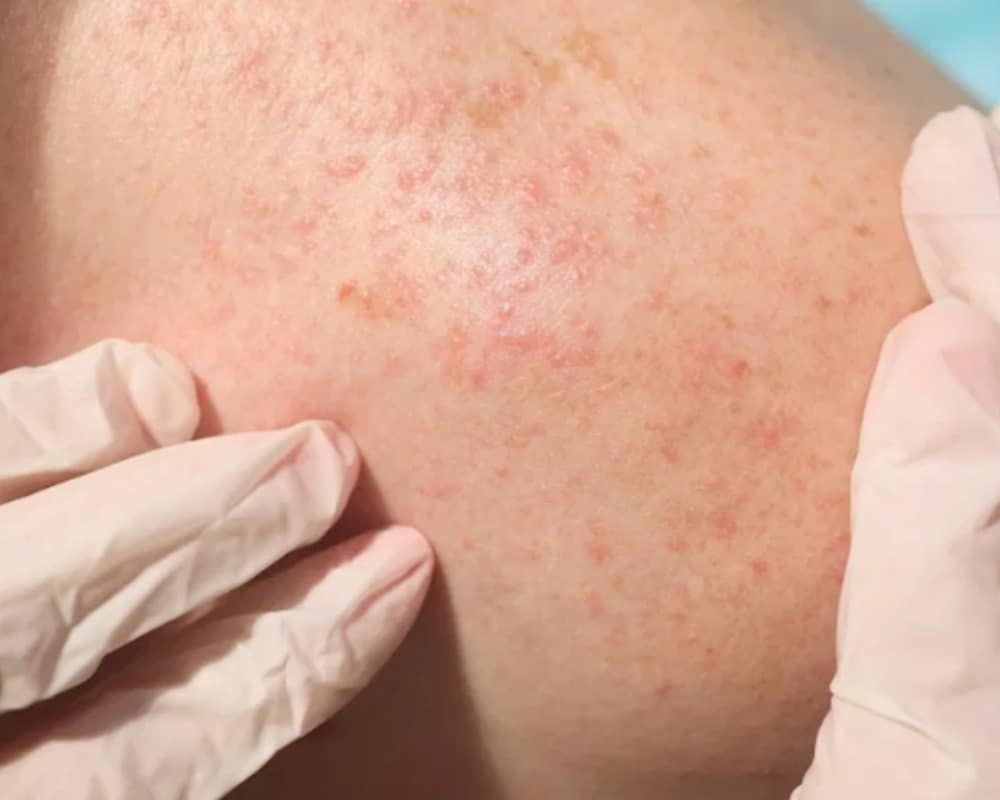
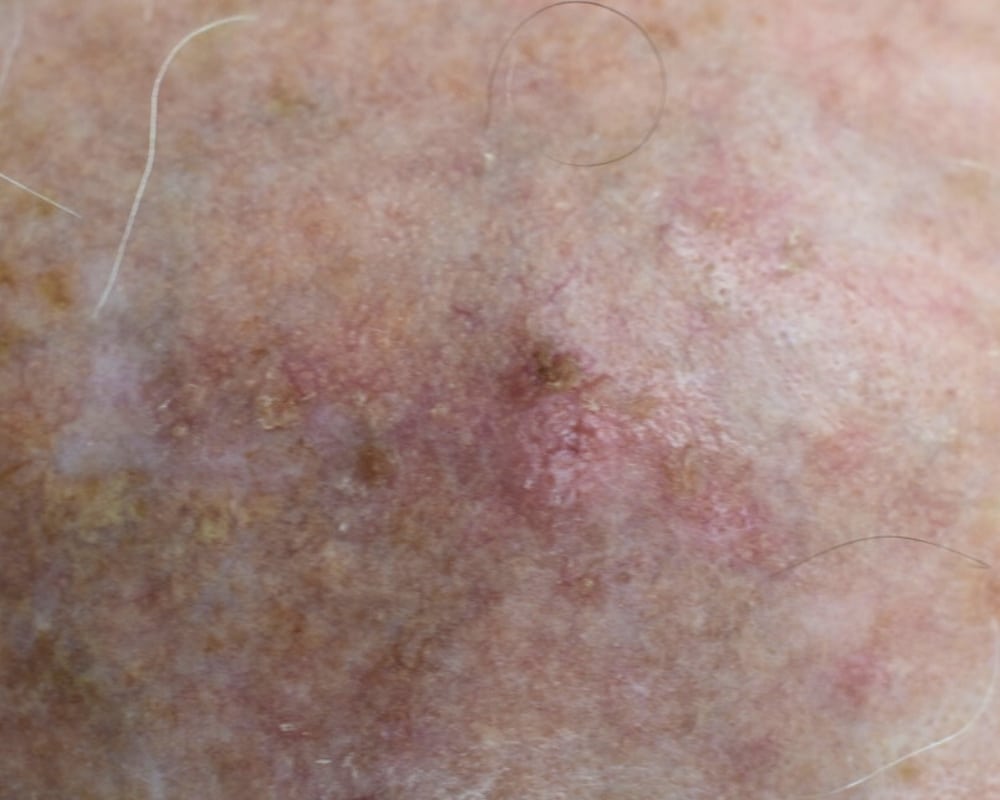
Actinic keratosis (AK) is a patch of skin that has been damaged by ultraviolet (UV) radiation over many years. On the surface, it appears as a rough, scaly or sandpaper-like area of skin and flesh-coloured, pink, red or brown in colour.
Many people find they feel the lesion before they see it: especially early forms may be felt before they’re visually apparent. Though harmless, some people choose to remove them when they become irritated or for aesthetic comfort.
Because AKs often occur as multiple lesions (or a “field change” of sun-damaged skin), the presence of one should prompt broader skin assessment.
Key Identifying Features
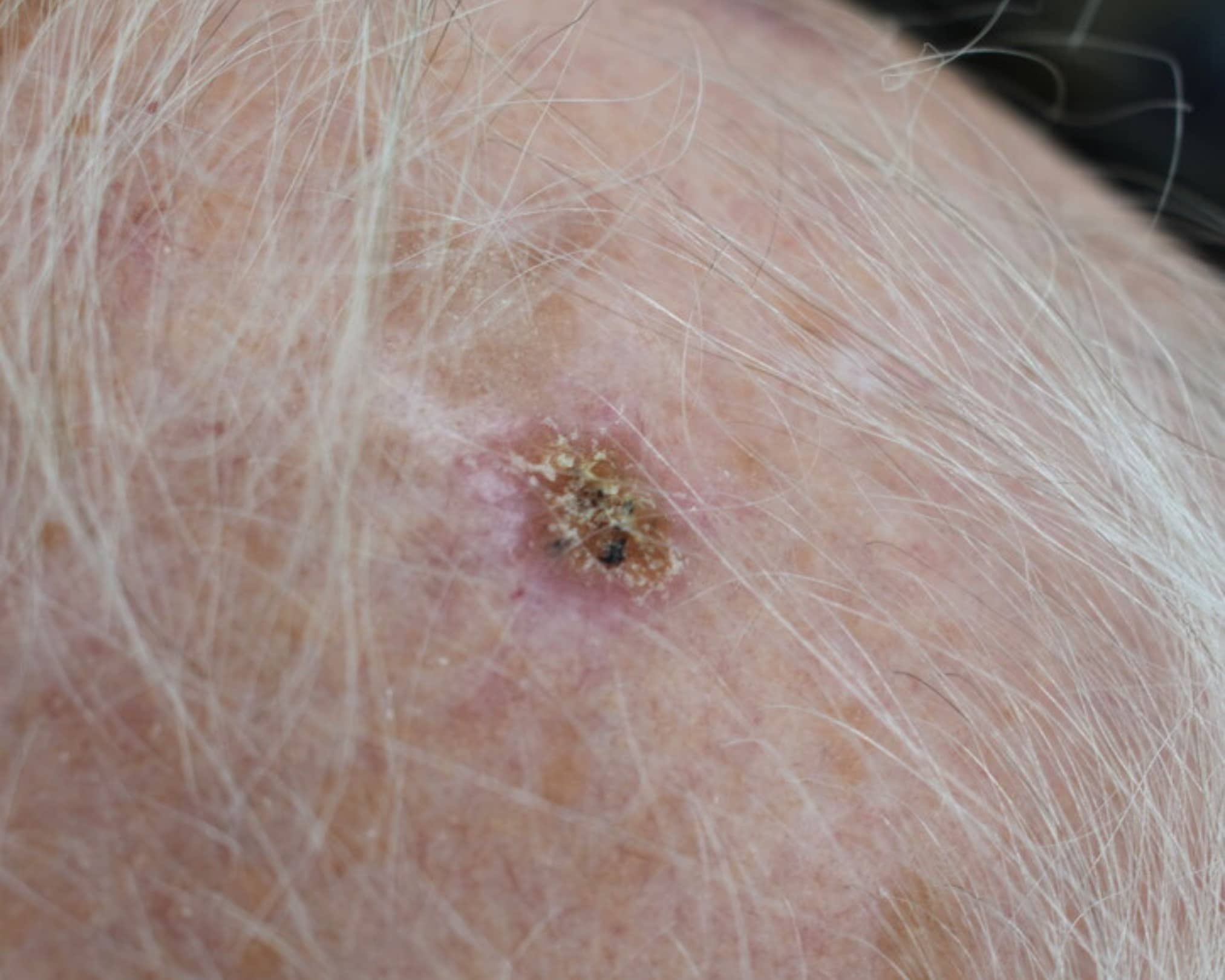
- Feels rough to the touch, sometimes like sandpaper; may be easier to feel than see.
- Colour varies: can be skin-coloured, pink, red or brown.
- Size is typically around 1–2 cm in diameter (though it can be smaller or larger).
- May be flat or slightly raised; in some cases, thicker or crusty.
- Surrounding skin often shows signs of sun damage (freckling, blotchy pigment, wrinkles).
Where They Commonly Occur
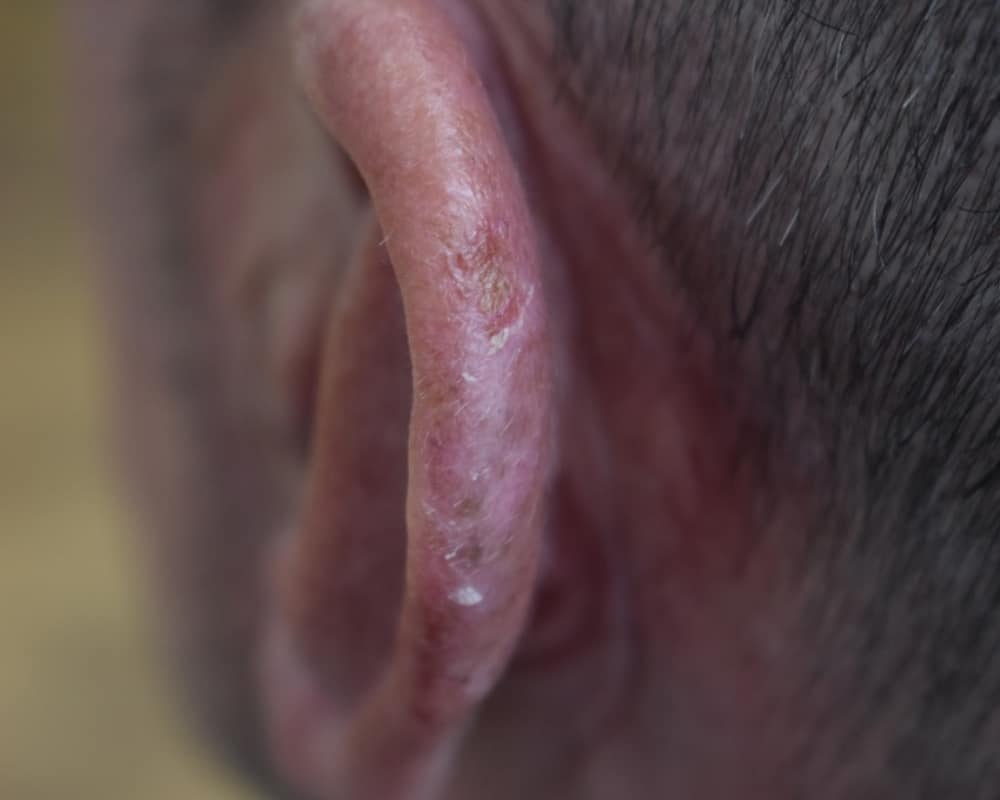
Actinic keratosis is most frequently found on areas of skin repeatedly exposed to the sun:
- Face (cheeks, forehead, temples)
- Ears
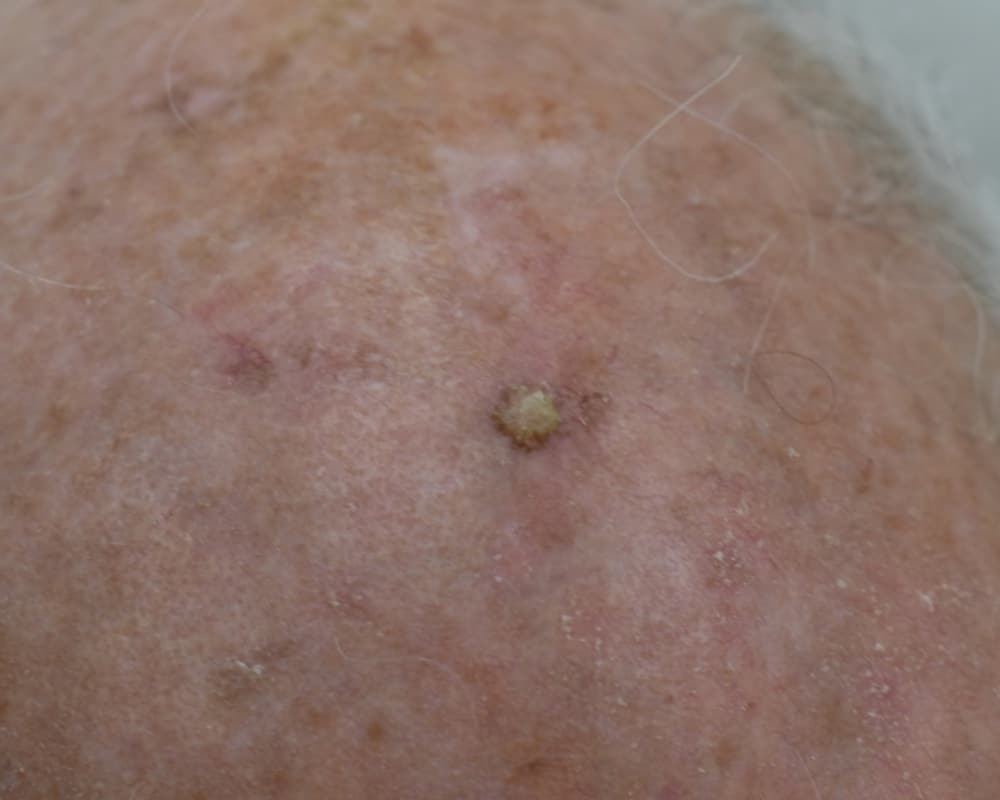
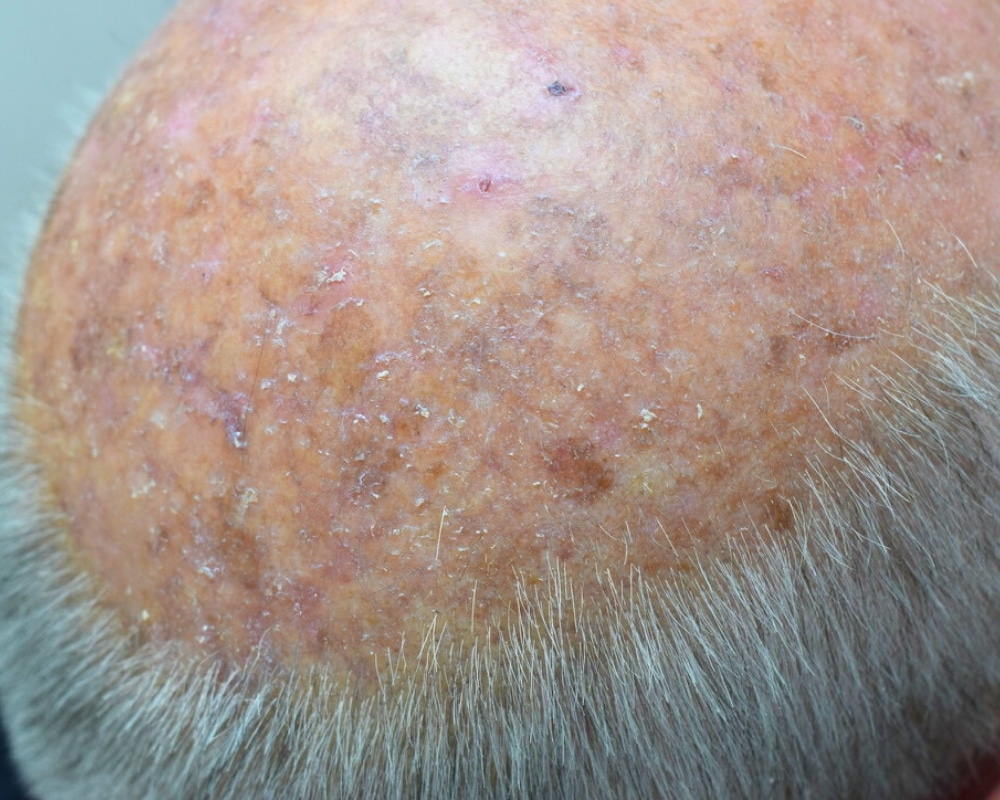
- Bald scalp (especially in older men)
- Backs of hands and forearms
- Lower legs (especially women)
- Lips (a variant called actinic cheilitis)
Contributing Factors
- Cumulative ultraviolet (UV) radiation exposure (sunlight, sunbeds) is the principal cause.
- Fair skin phenotype (freckles, pale skin, red/ blonde hair, blue/green eyes) who burn easily rather than tan.
- Older age: the longer the skin has been exposed to UV over the lifetime, the greater the risk. Among individuals aged +60, about 19-24% have at least one AK.
- Outdoor occupations or recreational exposure (farmers, construction, sailors) are at a higher risk due to UV exposure.
- Immunosuppression (organ transplants, medications) increases the risk of both AK and progression.
Actinic Keratosis is not contagious; however, it is considered precancerous or dysplastic lesion (squamous dysplasia) on sun‑exposed skin.
Although the vast majority remain stable or regress, AK carries a small risk of progression to skin cancer (some pathways estimate risk <1 in 1000 per year).
Prevalence
Actinic Keratosis is very common, particularly in older adults. For example, limited UK studies showed that about 19-24% of people over age 60 have at least one Actinic Keratosis.
Treatment Options
At Cambridge Contour Clinic, we offer the following professional medical-grade treatment options.
Cryotherapy
Using a fine jet of N₂O under high pressure, we freeze the lesion with millimetre precision.
Micro-Plasma Removal
We use a surgical-grade micro-plasma device, which creates a precise plasma arc (~0.02 mm accuracy) to vaporise the lesion tissue. For Actinic Keratosis, the use of this treatment would be assessed on a case-by-case basis.
Which is most suitable for you is best discussed within a consultation with one of our specialists, where they will discuss your treatment options, check you are able to have said treatments (i.e there are no health contraindications). They will also discuss healing and success rates, check that you are happy with any potential risks and address any necessary pre-care, post-care, treatment plans and pricing.
Other Potential Treatment Options
Here at Cambridge Contour Clinic, we focus on minimally invasive techniques to optimise healing and cosmetic outcomes. However, we believe in transparency to help our clients make an informed choice on how they would like to proceed. Therefore, if we are aware of other recognised treatment methods that may be suitable for you, we will discuss these during your consultation.

Prevention
Prevention focuses on protecting your skin from further UV damage, because the presence of one AK means the skin has accumulated sun damage.
- Use a high-factor broad-spectrum sunscreen daily on exposed areas (even on cloudy days).
- Wear sun-protective clothing, wide-brimmed hats, and sunglasses, especially when outdoors.
- Avoid sun-bed use and reduce time in direct midday sun.
- Regularly check your skin and keep an eye on sun-exposed areas.
- After treatment of AKs, continue sun-protection to reduce the risk of further lesions.
- These steps align with the guidance from the NHS and specialist dermatology sources.

When to seek specialist review
While most actinic keratoses are benign, they act as a marker of sun damage and in a small number of cases can progress toward Squamous Cell Carcinoma (SCC). You should seek prompt review if you notice:
- A treated patch that does not heal or significantly improve after treatment
- Rapid growth, thickening, nodularity or induration of the lesion
- Ulceration, bleeding or persistent tenderness
- New lumps in a previously flat or scaly area. In such instances, referral for dermatology assessment and possible biopsy may be appropriate.
Actinic Keratosis Frequently Asked Questions
Will an Actinic Keratosis definitely turn into skin cancer?
No. Most do not. However, they represent sun damage and carry a small risk of progression.
How soon after treatment can I sunbathe or go swimming?
We’ll provide specific after-care instructions, but generally you should avoid high-sun exposure, heat, swimming pools or saunas until the site has healed and you have resumed daily SPF protection.
Can I just leave it untreated?
Yes - in some cases, small, stable AKs may be monitored instead of treated. But because AKs signal underlying sun-damage, and because there is a (low) risk of progression, many patients choose to treat for reassurance, cosmetic reasons or prevention.