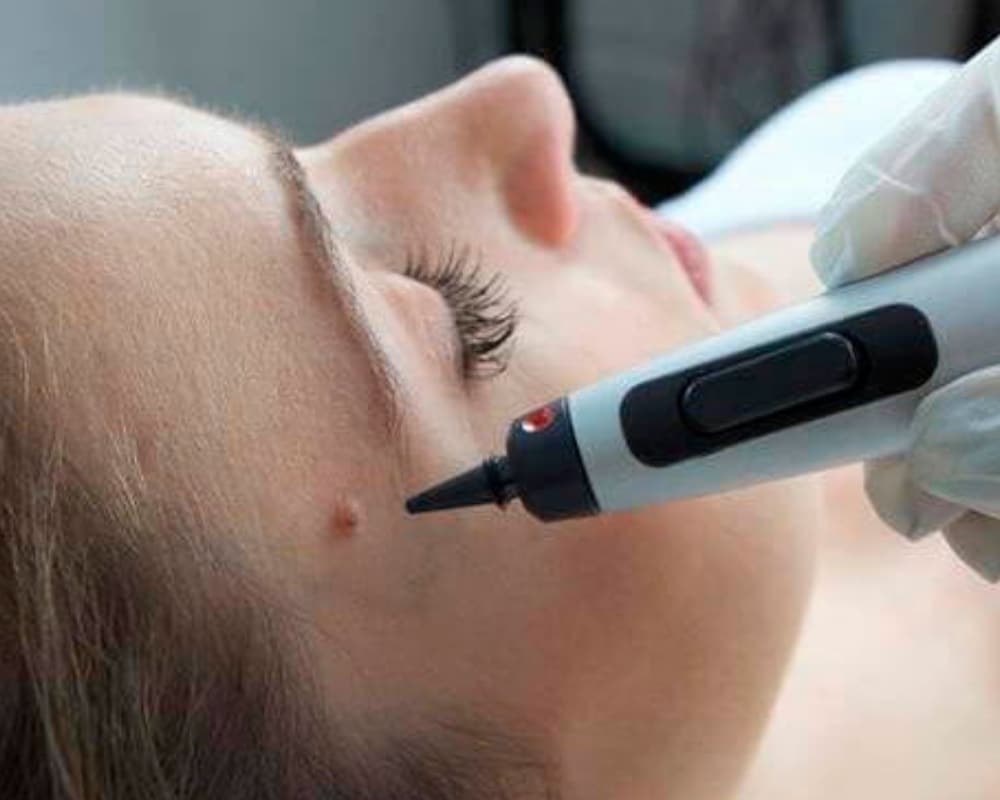


What are skin tags?
Skin tags are small, benign (non-cancerous) growths of skin that typically appear as a little flap or stalk hanging off the surface. They are often flesh-coloured or slightly darker, soft in texture, and may protrude on a narrow base (pedunculated).
They tend to appear in areas where the skin folds or rubs together. Because they are benign, they generally do not cause health problems, though they may become irritated, catch on jewellery or clothing, or simply cause aesthetic concern.

Key Identifying Features
- Soft, small skin-coloured or slightly darker growths, often on a narrow stalk.
- Size varies: typically a few millimetres, though some may grow larger (up to around 2-5 cm in some cases).
- Generally painless unless irritated by friction, jewellery or clothing.
- Non-cancerous and often remain stable, though new tags may form over time.
- It may be mistaken for other lesions (warts, moles) without expert assessment.
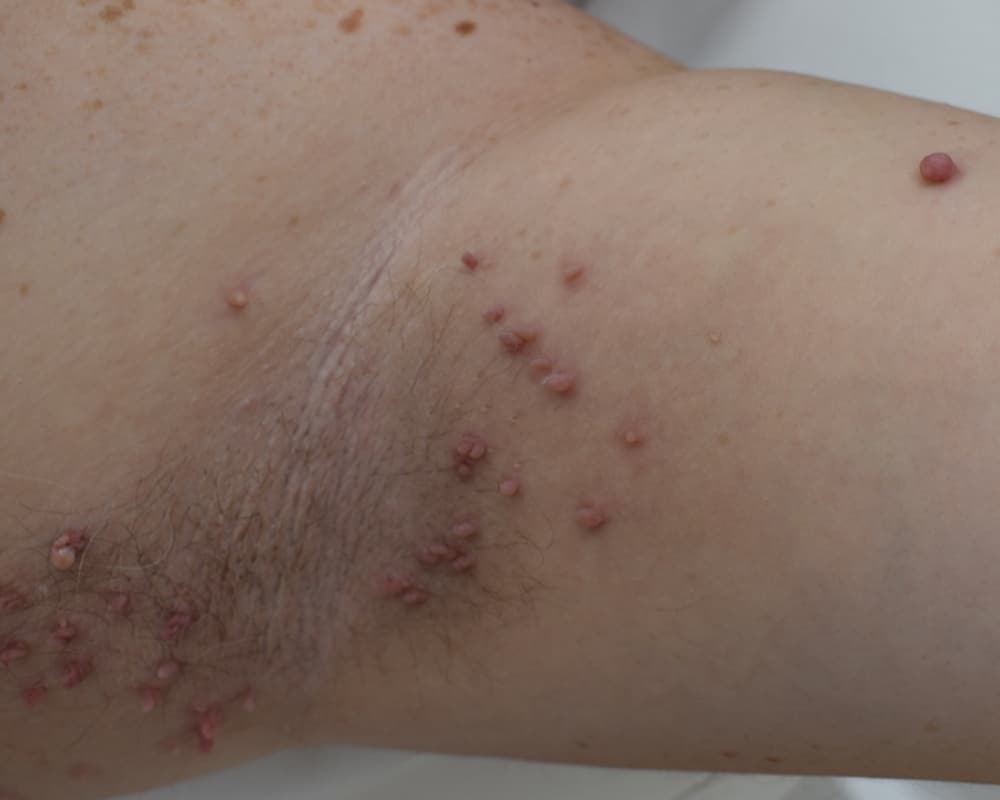
Where They Commonly Occur
Skin tags most commonly occur in areas where skin folds or where skin rubs against skin or clothing, including:
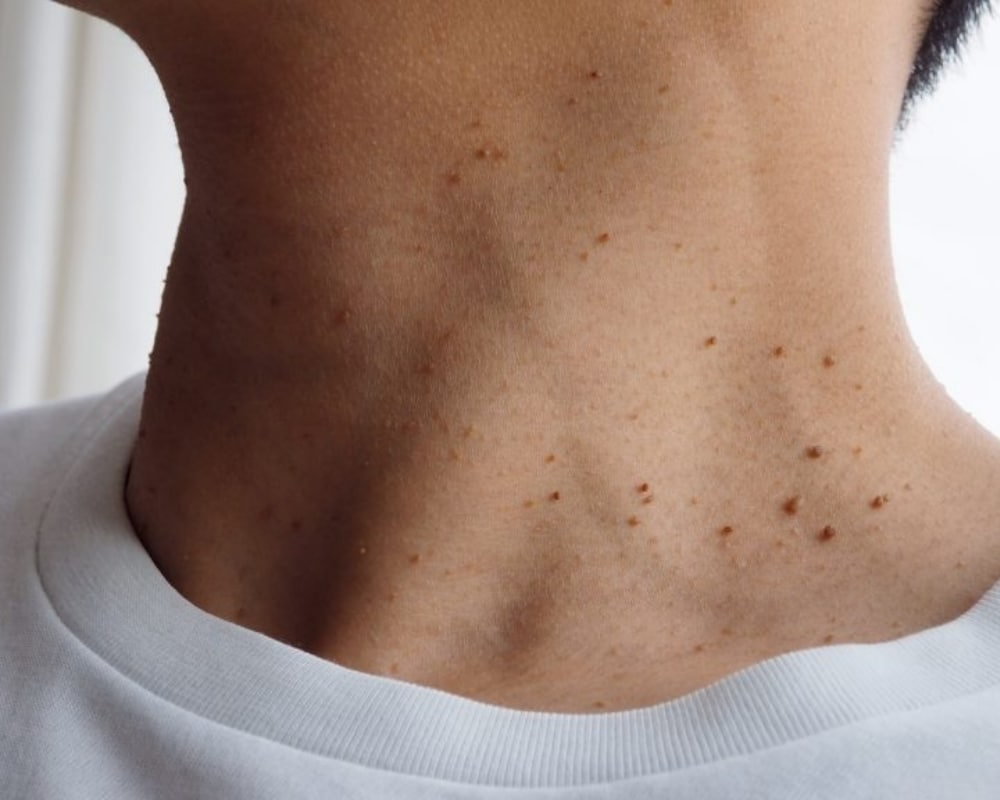
- Neck
- Underarms (axillae)
- Under the breasts
- Groin/inner thighs
- Eyelids or around the eyelid margin
- Buttocks folds and under large skin folds
- Less commonly, they may appear in other body locations


Contributing Factors
While the exact cause of skin tags is not fully understood, the following factors are recognised as contributing or increasing the likelihood of their appearance:
- Mechanical friction: skin-on-skin contact or rubbing of clothing/jewellery over skin folds.
- Genetic predisposition: a family history of tags increases risk.
- Age: incidence increases with advancing age; many develop in the fifth and sixth decades.
- High body mass index: more skin folds and higher friction; closely associated with insulin resistance.
- Metabolic factors: type 2 diabetes, insulin resistance, and dyslipidaemia have been linked.
- Hormonal changes: pregnancy and menopause may increase tag formation.
Prevalence
Skin tags are very common, affecting both men and women equally. Studies estimate that 50 %-60 % of adults will develop at least one skin tag in their lifetime.

Treatment Options
At Cambridge Contour Clinic, we offer the following professional medical-grade treatment options for skin tags:
Micro-Plasma Removal
We use a surgical-grade micro-plasma device, which creates a precise plasma arc (~0.02 mm accuracy) to vaporise the lesion tissue.
Cryotherapy
Using a fine jet of N₂O under high pressure, we freeze the lesion with millimetre precision.
Which is most suitable for you is best discussed within a consultation with one of our specialists, where they will discuss your treatment options, check you are able to have said treatments (i.e there are no health contraindications). They will also discuss healing and success rates, check that you are happy with any potential risks and address any necessary pre-care, post-care, treatment plans and pricing.
Other Potential Treatment Options
Here at Cambridge Contour Clinic, we focus on minimally invasive techniques to optimise healing and cosmetic outcomes. However, we believe in transparency to help our clients make an informed choice on how they would like to proceed. Therefore, if we are aware of other recognised treatment methods that may be suitable for you, we will discuss these during your consultation.
Prevention
While full prevention is not always possible (due to genetic and metabolic factors), the following steps may reduce the risk of new skin tag formation or irritation of existing ones:
- Maintain a healthy weight and body mass index to minimise skin folds and friction.
- Avoid tight clothing or jewellery that rubs against skin folds.
- Keep skin folds clean and dry to reduce friction or irritation.
- Manage metabolic health: monitor for insulin resistance, type 2 diabetes, lipid disorders.
- During pregnancy or hormonal shifts, monitor areas of skin friction and consider early review if tags become bothersome.
Avoid attempts to self-remove skin tags (tying off, cutting, home freezing) as these carry the risk of infection, bleeding or scarring.
For further information, do not hesitate to book a consultation with one of our specialists.

When to See a Specialist
You may wish to consider discussing your lesion or treatment if:
- The growth changes in shape, colour, size or bleeds - this may require further investigation.
- It becomes painful, irritated, or catches on clothing/jewellery repeatedly.
- You are unsure whether a lesion is a skin tag or something else (wart, mole, or mole with suspicious features), as assessment is important.
- You would like the removal of your lesion(s) for comfort or cosmetic reasons, as professional treatment is recommended over home methods.